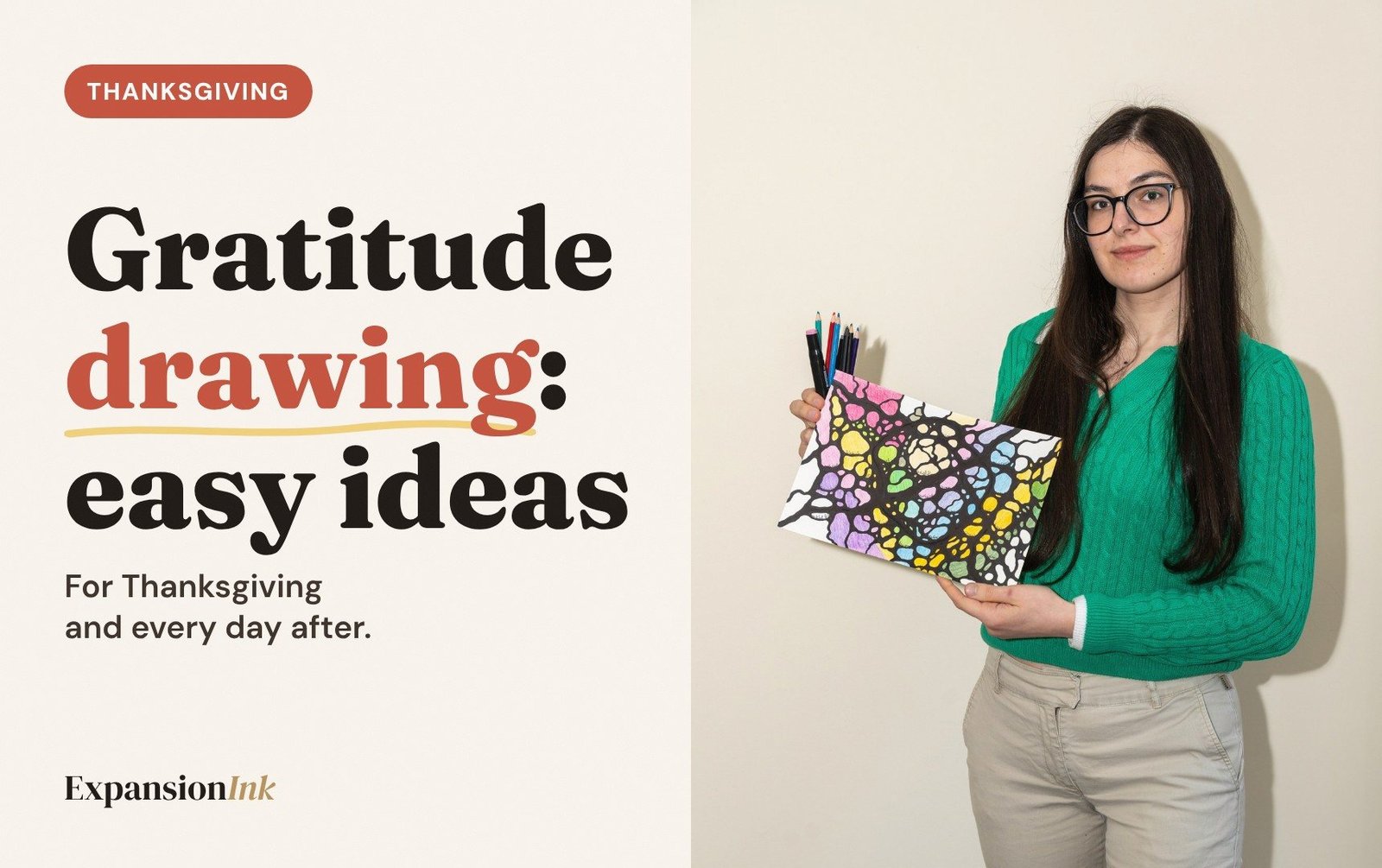
Thanksgiving dinner. Someone says, “Let’s go around the table and say what we’re grateful for.”
You say “my family” and “my health,” because that’s what you’re supposed to say.
And you mean it. You just don’t feel it.
You know you have a lot to be grateful for. So why doesn’t it feel that way?
Often it’s because gratitude stays in your head. You list it, you think it, you move on.
A gratitude drawing slows you down long enough to actually feel it.
A gratitude drawing is a simple art practice: you pick one thing you’re thankful for and draw it with slow lines, a few shapes and color. It takes about 10 minutes, needs no art skills, and turns gratitude from a passing thought into something you can see on paper.
Below you’ll find six easy gratitude art ideas for Thanksgiving, the supplies you need, a 10-minute drawing you can do any evening, 10 prompts, and a few ways to keep it going long after the leftovers are gone.
✨ Want a guided version? My Gratitude Practice is a short drawing session you can press play on whenever you need it.
Why practice gratitude through art instead of a list?
Drawing helps you practice gratitude because it keeps your focus on one moment long enough to notice it, which a quick list rarely does.
Gratitude journals are lovely. I’ve written about the benefits of journaling myself.
But many people hit the same wall after a few weeks.
- “I write three things every night and feel nothing.”
- “I feel guilty for not being more grateful.”
- “I only notice what’s missing.”
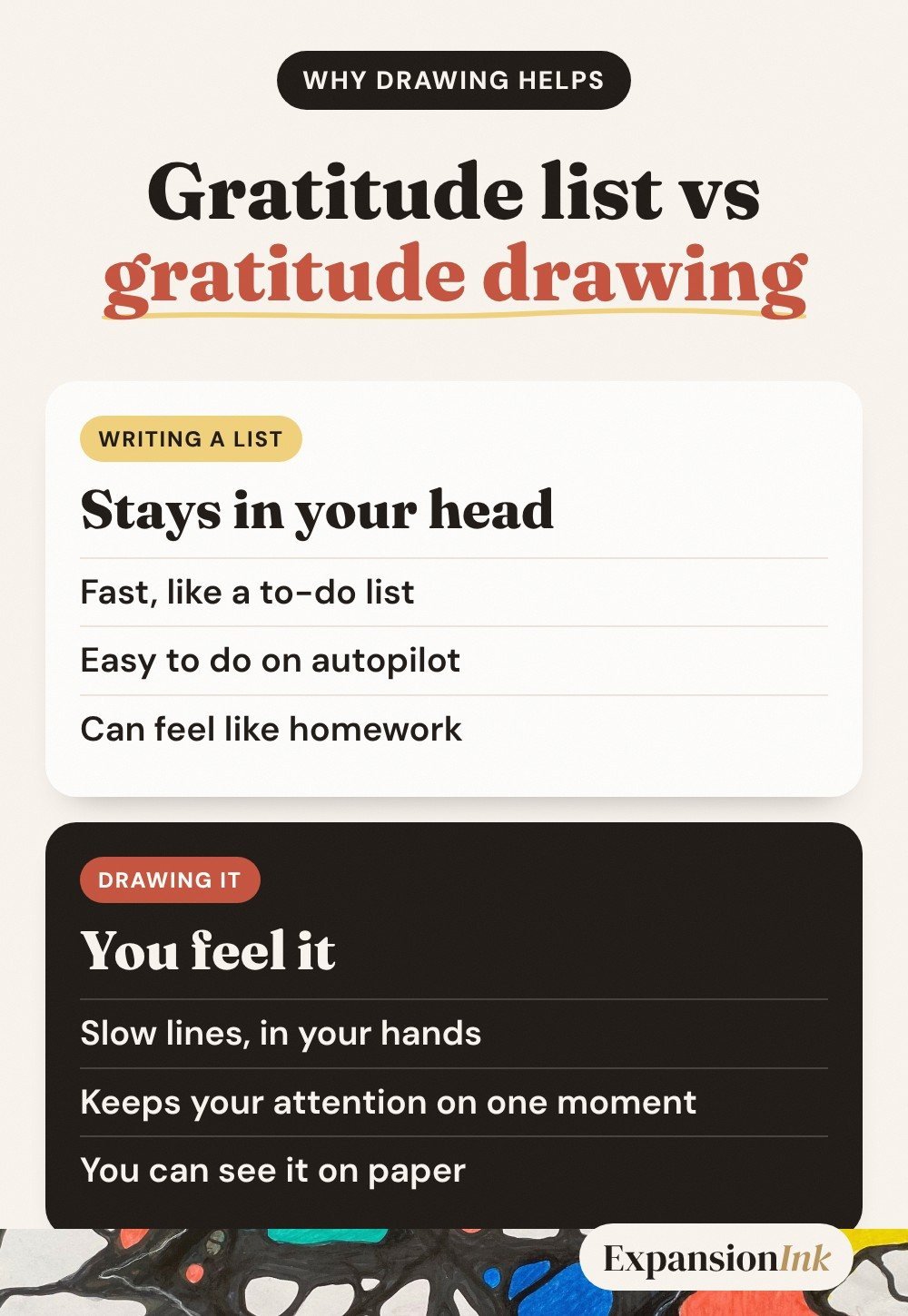
That’s not a character flaw. A list is fast, and fast is easy to do on autopilot.
Your hand writes “my kids,” your mind is already on tomorrow’s meeting.
Drawing works differently.
Slow lines keep your attention on one moment for longer than a list ever does. You stay with the memory while your hand moves. You notice the color you’d give it, the shape, the size.
And when you’re done, you can see it. Your gratitude is on paper in front of you, not just a thought that already passed.
Gratitude drawing works a bit like mindfulness or a short meditation with a pen in your hand. Your hand moves slowly, your breathing slows with it, and your attention stays with one image instead of jumping ahead. That’s why many people find gratitude through art easier to notice than gratitude through words. A small drawing can be surprisingly powerful.
Gratitude that stays in your head turns into one more task. When you draw it, you feel it.
If you want the longer explanation, I wrote about why drawing often works better than journaling for this kind of inner work.
6 easy gratitude art ideas for Thanksgiving
The easiest gratitude drawing ideas are a gratitude tree, thank-you lines, circles of people, an ordinary-day map, table cards and a gratitude jar.
None of these need art skills. They need paper, a black pen, a few colors and a few quiet minutes.
Pick one that fits your day, or try a different one each evening of Thanksgiving week. You don’t have to celebrate Thanksgiving to use them, either. Any evening in the holiday season works.
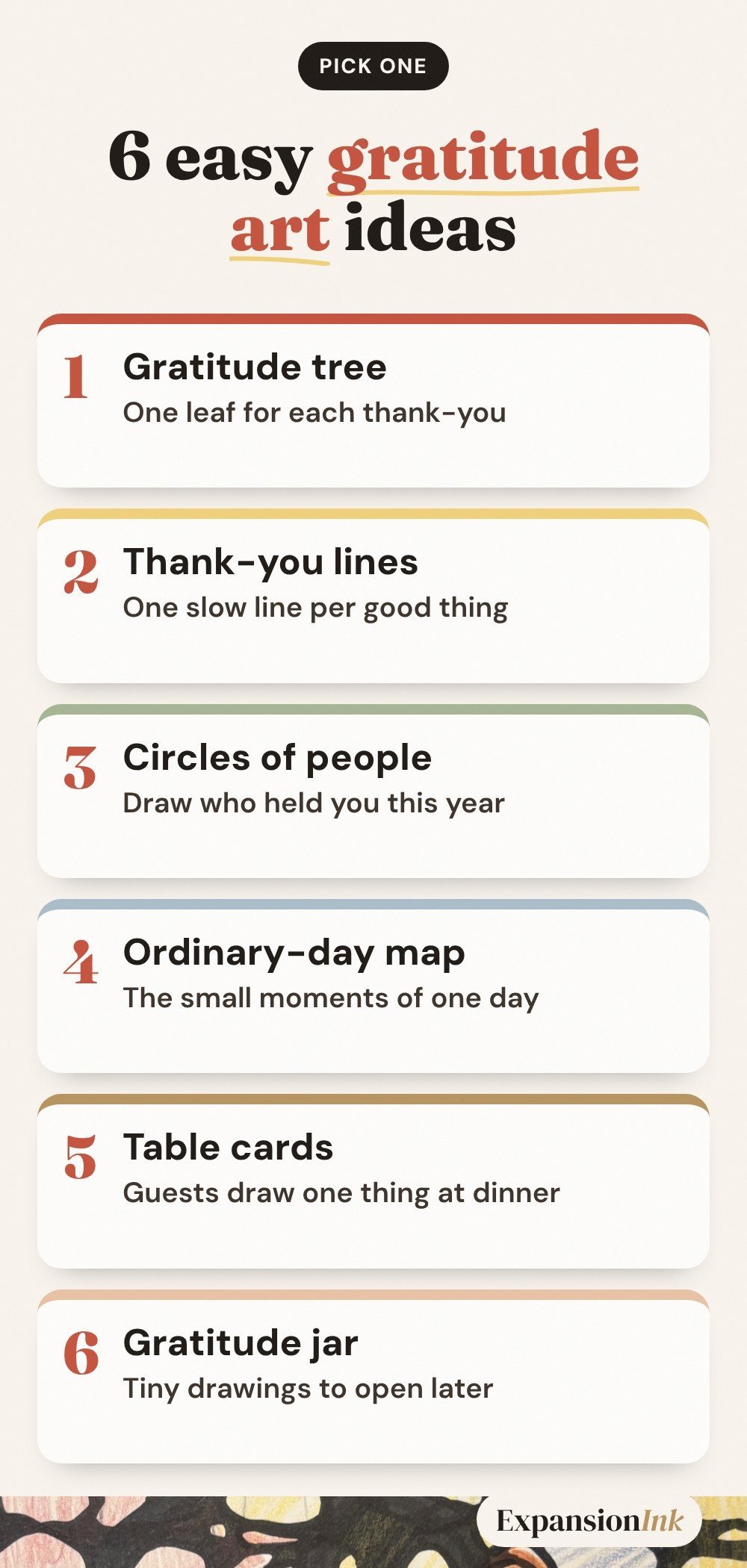
1. A gratitude tree for everything you’re thankful for
Draw a simple trunk and a few branches. Every time you think of something you’re thankful for, add a leaf.
Color the leaves in autumn shades. By the end of the week the tree is full.
2. Thank-you lines
For each good thing, draw one slow, wandering line across the page, from one edge to another.
Let the lines cross. Where they meet, round the corners. You end up with a web of everything that held you up this year.
If you’ve never drawn this kind of line, my guide to neurographic lines shows you how in a couple of minutes.
3. Circles of people
Draw a small circle in the middle for you. Around it, draw a circle for each person who helped you this year, big or small.
Connect them to your circle with lines. Notice who’s closest. It’s a simple way to honor the connection you have with each of them.
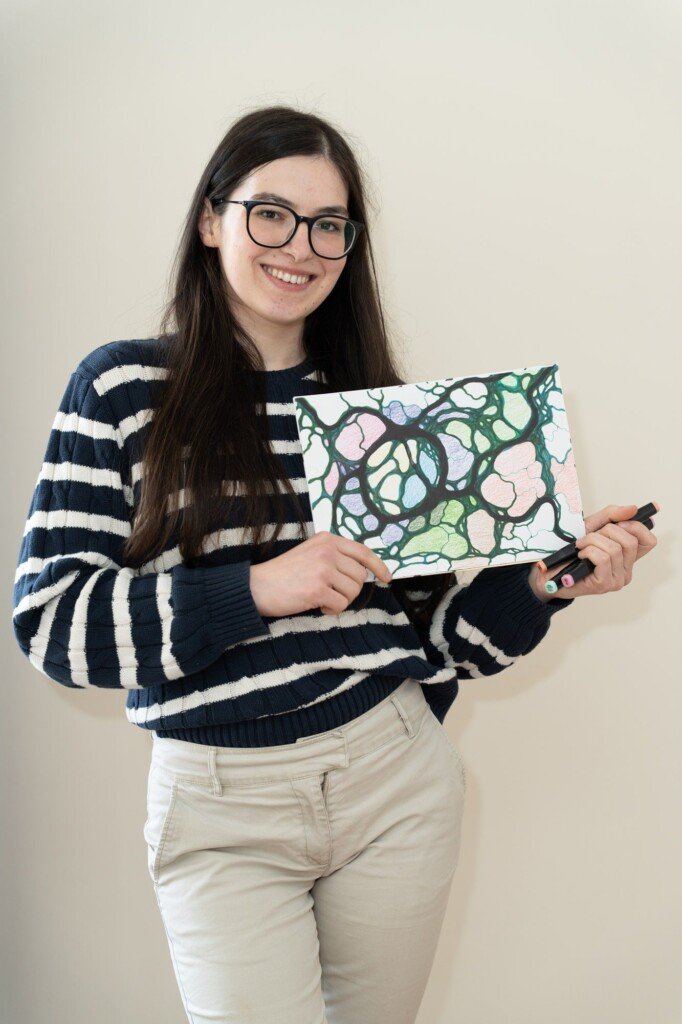
4. An ordinary-day map
Pick one ordinary day from this week. Draw a small shape for each good moment in it: the first coffee, a message from a friend, the walk home.
It’s a quiet reminder that good days are made of small things.
5. Thanksgiving table cards (a family activity)
Put a card and a pen at every plate. Before dinner, everyone draws one thing they’re grateful for, no words allowed.
Then go around the table and guess. It’s a fun Thanksgiving activity, funnier than the usual speech, and people actually remember it. If a card is about someone at the table, hand it to them at the end. It’s a small gift people tend to keep.
6. A gratitude jar, step by step
Draw a jar: a rounded rectangle with a short neck and a lid. Inside it, add one small circle, heart or star for each thing you’re grateful for this week. Color each one in a shade that matches the memory.
Want a real jar too? Every evening, draw one tiny doodle on a small square of paper, fold it and drop it in a jar on your shelf. These are the small moments you’ll want to cherish. Open the jar on a hard day in February.
👉 Start with the one that made you smile while reading. That’s usually the right one.
What supplies do you need? Paper, markers and an optional sketchbook
You only need paper, a black marker and two or three colors. A sketchbook is nice, but it isn’t required.
- Paper: plain printer paper, a sketchbook or a small notebook you keep by the bed.
- A black marker or pen for the lines. A fine liner is enough.
- Colors: colored pencils, markers or crayons, whatever you already have.
- Ten quiet minutes and a cozy spot where no one needs you.
A small tip: set up an invitation for yourself. Leave the sketchbook open on the table with the markers next to it. When everything is ready, it’s much easier to get started.
Try it tonight: a 10-minute gratitude drawing
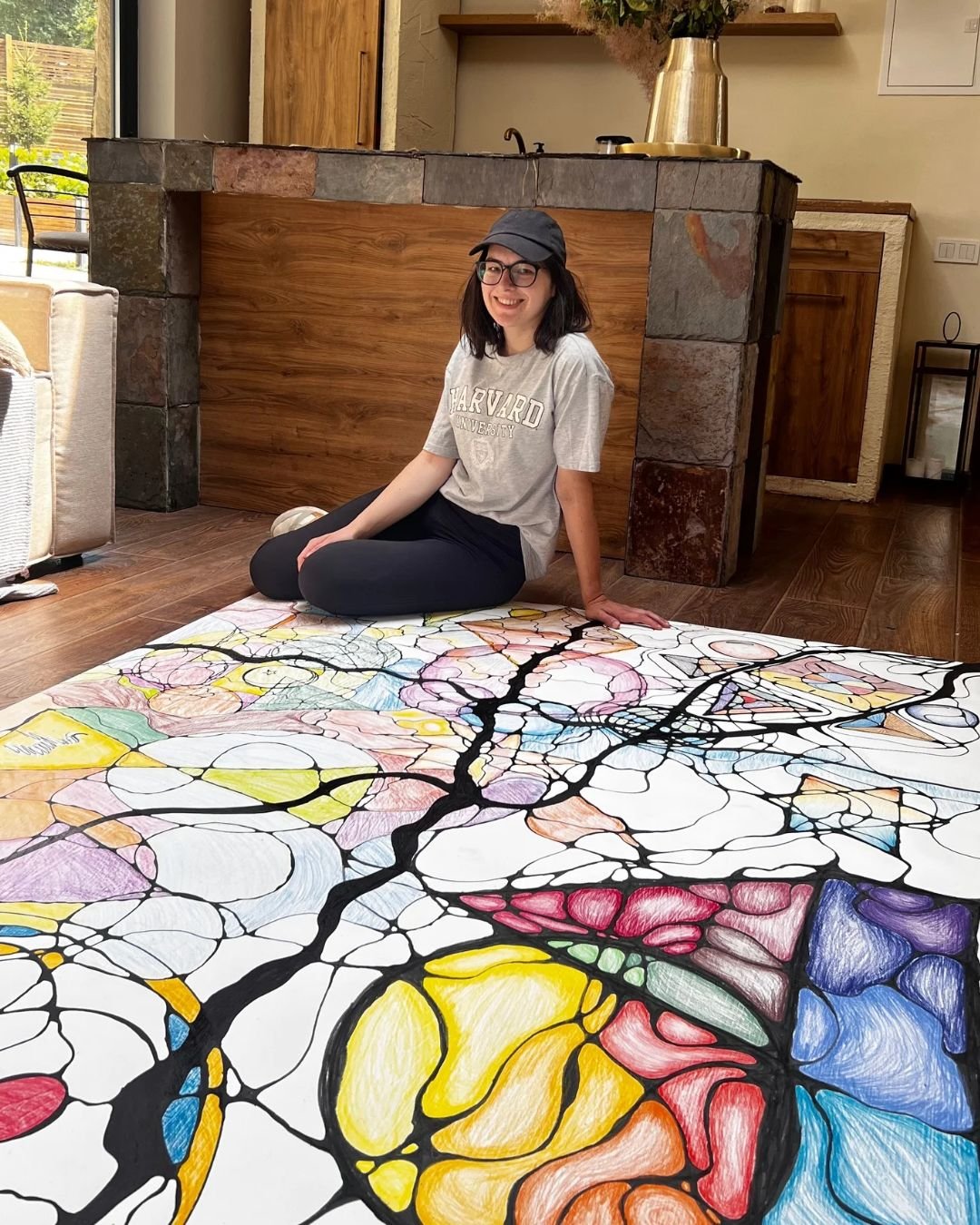
This is the simplest version of what I teach, using Neurographica, a drawing method built on slow lines and soft, rounded corners.
Grab your supplies and give yourself ten minutes.
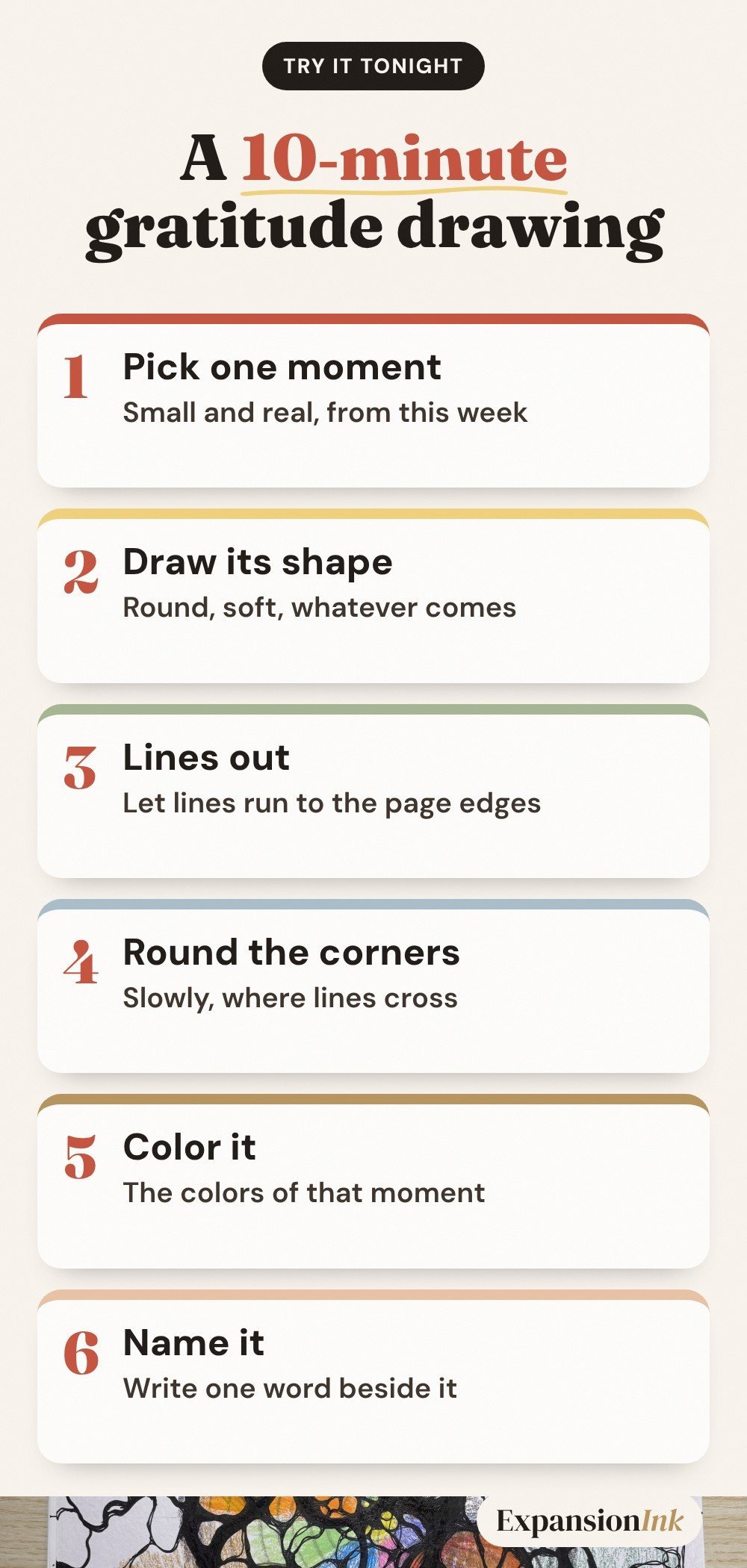
Step 1: Reflect and pick one moment (1 minute)
Not “my family.” One specific moment from this week, with one detail you remember. The way your daughter laughed at breakfast. The stranger who held the door. The warm bath.
Small and real beats big and vague.
Step 2: Draw its shape (2 minutes)
In the middle of the page, draw a shape for that moment. Don’t plan it. Round, soft, tall, wide, whatever comes.
Step 3: Let lines run out (2 minutes)
Draw five or six slow lines that start at one edge of the page, pass through or around your shape and leave at another edge.
This connects your moment to the rest of your life.
Free step-by-step guide
Learn the method step by step
Want the steps on one page next to you while you draw? Get the free Neurographica guide, plus two short videos. No art skills needed.
Free. You’ll also get emails from me. Unsubscribe anytime.
Step 4: Round the corners (3 minutes)
Wherever lines cross and make a sharp angle, soften it with a small curve.
Go slowly. While you round, keep the moment in mind. This is where many people feel the gratitude land in their body, not just their head.
Step 5: Color it (1 minute)
Pick the colors of that moment. Golden for the bath, blue for the walk, whatever fits.
Fill a few shapes. You don’t need to fill them all.
Step 6: Name what you’re grateful for (1 minute)
Write one word beside your drawing. Then, if it feels right, express your thankfulness out loud: say “thank you” to whoever or whatever it is for.
That’s it. Ten minutes.
Look at the page for a moment before you put it away. Notice how your body feels.
Beauty is part of this. But you’re not drawing to impress anyone. You’re drawing to feel something.
Let it unfold before you judge it.
You don’t need to be an artist or think of yourself as creative. Each time you sit down to create one of these, you’re doing a gentle exercise in noticing. The creativity comes with it.
What if this year was hard?
Some years, gratitude feels almost impossible.
Grief, a diagnosis, a job loss, a relationship that ended. Being told to “count your blessings” can feel like being told your pain doesn’t count.
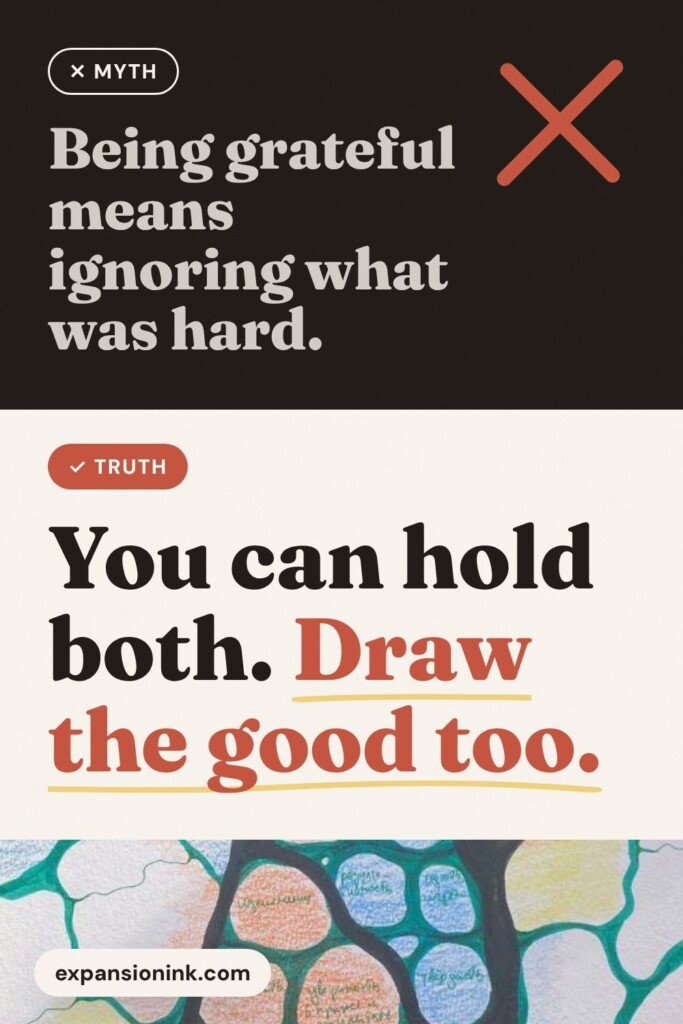
You don’t have to pretend.
Gratitude doesn’t cancel what was hard. It sits next to it.
👉 If this year was heavy, try this version: draw the hard thing first, in one corner of the page. Then draw one small thing that helped you through it, in another corner.
Connect them with slow lines. Round every corner where they meet.
You’re not making the hard thing smaller. You’re making room for both.
For many people, this version feels more honest. You stop performing gratitude and start noticing it. That shift is quieter than a list, and it lasts longer.
You can be grateful and still be tired. Both are true.
How to make gratitude drawing a daily habit
The easiest way to make gratitude drawing a habit is to keep it tiny: one small drawing, at the same time each day, in the same sketchbook.
Thanksgiving is one day. The habit is what changes how you see things.
Your brain gets better at what it practices. That’s the idea behind neuroplasticity. Notice good things often enough, and noticing them gets easier.
In one well-known study, people who wrote down a few things they were grateful for each week felt better about their lives overall than people who wrote about daily hassles (Emmons & McCullough, 2003).
- Keep a gratitude sketchbook on your nightstand. One tiny sketch a night, two minutes.
- Pick a day. Sunday evening is a good time to focus on gratitude. One 10-minute gratitude drawing a week.
- Try a 30-day challenge. One small drawing a day for a month. Missed a day? Pick it up the next.
- Combine it with your gratitude journal. Add one line, then draw it underneath.
- Draw with someone. A partner, a child, a friend on video. Share one drawing each.
- Look back. At the end of the month, lay your drawings side by side.
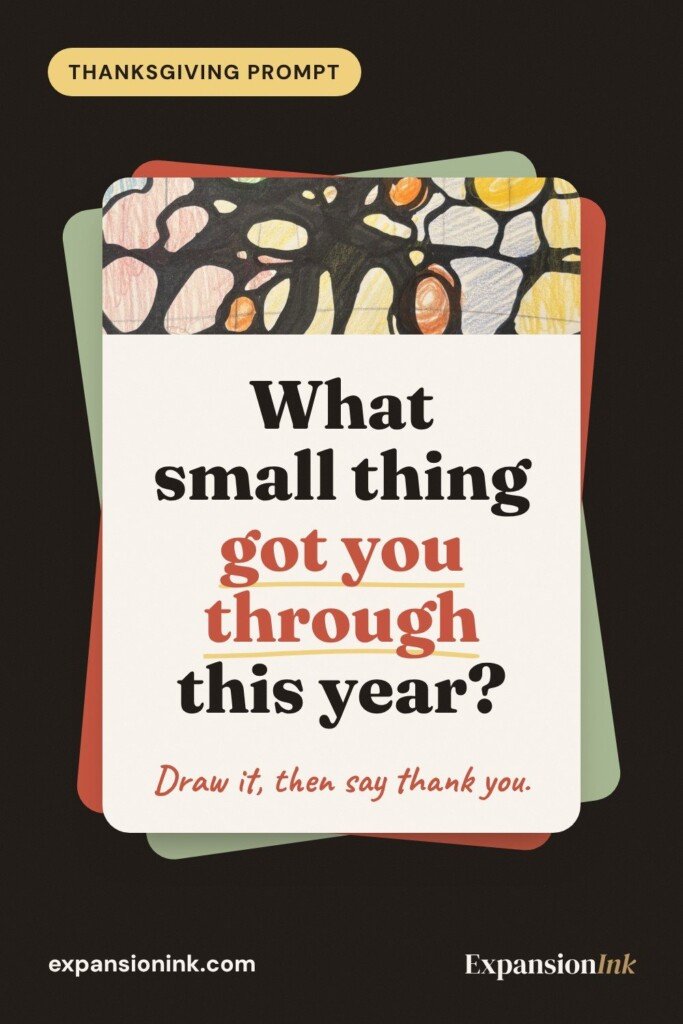
Use that question as your prompt this week. Write the first answer that comes, then draw it.
When I started drawing seriously in 2021, I was so stressed I barely noticed anything good.
Over time, looking back at my drawings showed me how much had quietly changed. More rest, better sleep, more ease. Gratitude came from seeing that, not from forcing it.
I’ve since supported 1,000+ people with this kind of drawing, and none of it requires talent.
10 gratitude drawing prompts for adults
Gratitude drawing prompts are short questions that give your pen a starting point, so you’re not staring at a blank page.
Stuck on what to draw? Pick one prompt a night and explore it. Answer it in shapes and color, not words.
- A meal that made you feel looked after
- Draw your favorite place, the one where you feel like yourself
- Someone who made you laugh this month
- Something your body did for you today
- Three small things that bring you joy
- A moment of peace from today (reflect on your day and pick one)
- Something you used to wish for that you have now
- A person you never thanked properly
- A mistake that taught you something
- One thing about yourself you’re glad about
👉 Draw it as a shape first. Then let slow lines run out from it to the edges of the page and round the corners where they cross.
Some of these gratitude prompts will feel easy. Some will surprise you. The ones that make you pause are usually the ones worth drawing, because that’s where you discover something a little deeper.
Want me to guide you?
If you’d like to be walked through it, the Gratitude Practice is a short guided drawing. Press play, draw along with me, and let gratitude become something you feel, not one more thing on your list.
And if you want to look a little further ahead, these workshops pair well with it.
Ready for the next step?
Feel it, don't just list it
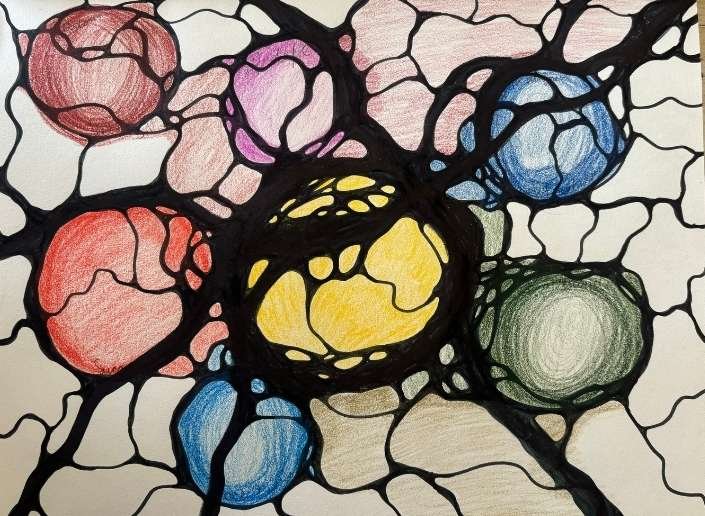 $11Guided practiceGratitude PracticeFeel gratitude instead of just listing it.Explore the practice →
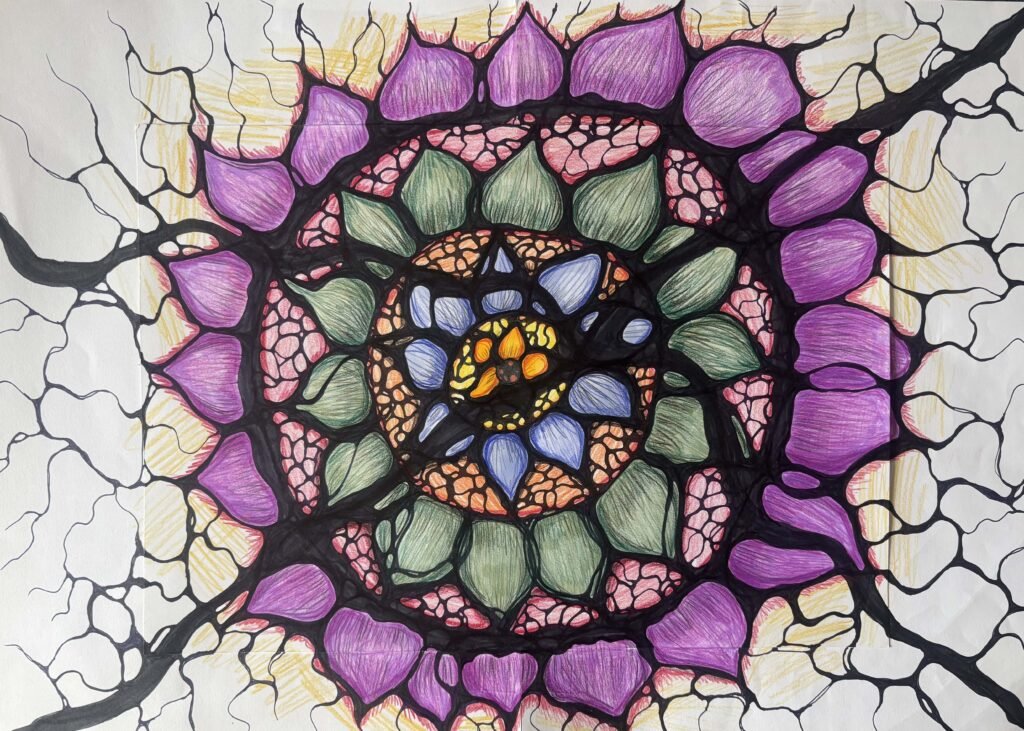 $19Guided drawingExpansion LotusSee where you are and where you are ready to grow next.See the details →
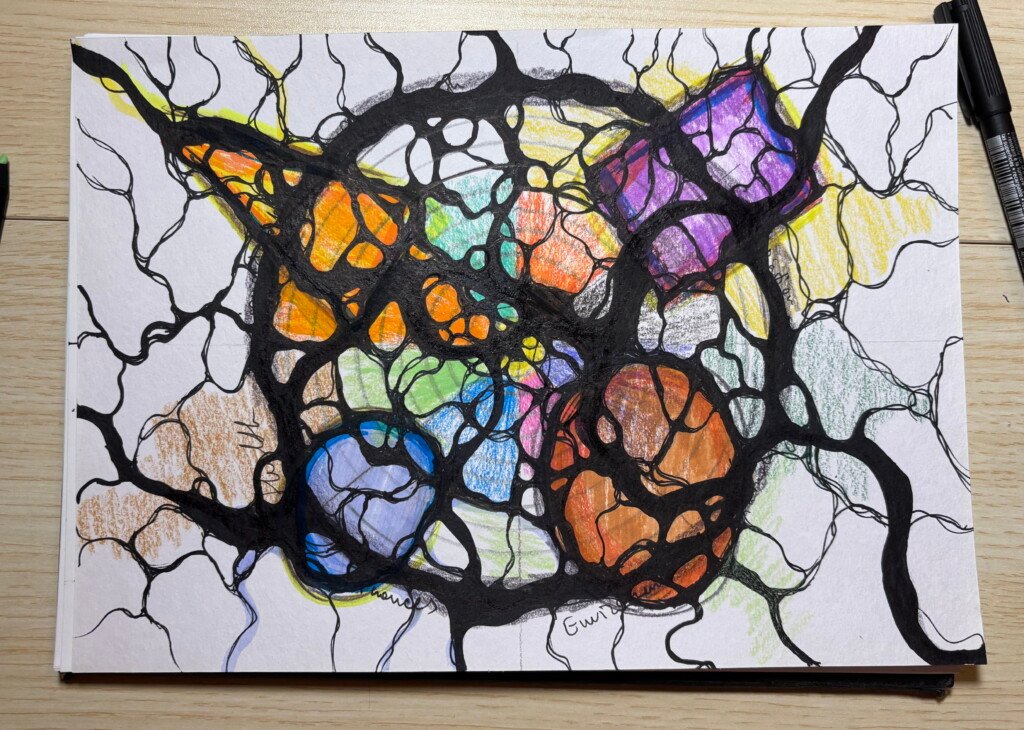 $19Recorded workshopWheel Of LifeSee which area of your life needs you most, and what to change first.Explore the workshop →
Expansion Lotus helps you see where you are and where you’re ready to grow. Wheel of Life shows which area of your life needs you most right now.
All of them are recorded, so you can do them at your own pace.
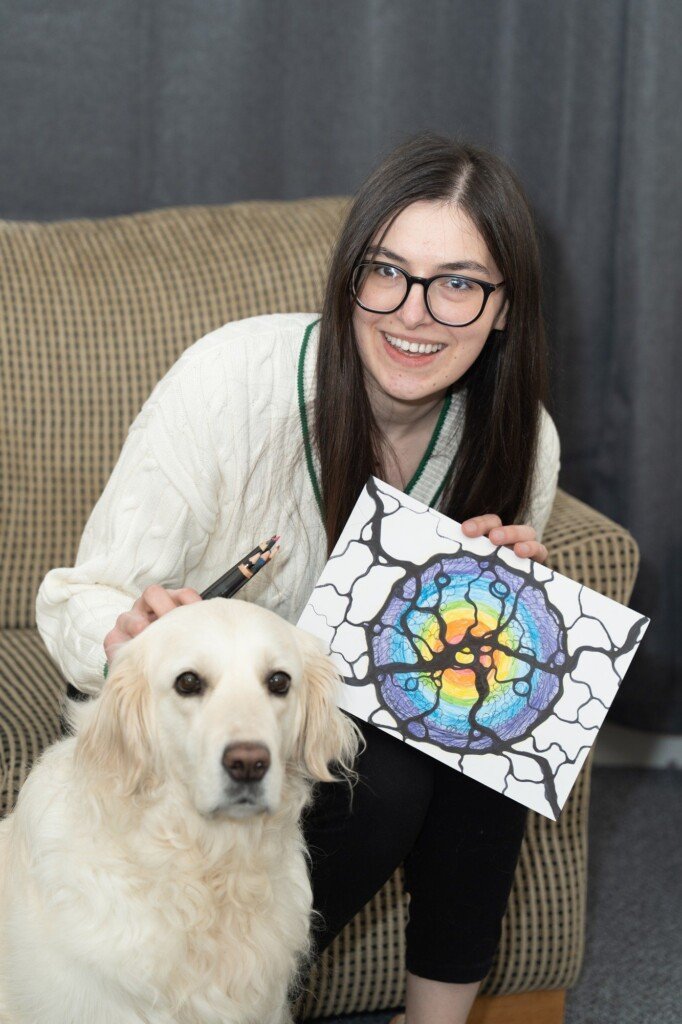
Gratitude doesn’t need to be big. Sometimes it’s a warm dog, a colorful page and a quiet Sunday.
Small things are where most everyday happiness lives. They’re what make life feel full. Notice them this week. Draw one of them. Then notice how much easier the next one is to see.
FAQ
What is a gratitude drawing?
It is a short drawing practice where you choose one thing you are grateful for and draw it with slow lines, soft corners and a few colors, instead of writing it in a list.
Do I need to be good at art?
No. You draw simple lines and shapes. No drawing experience is needed, and the point is to feel the gratitude, not to make a perfect picture.
What are easy gratitude art ideas for kids?
A gratitude tree with one leaf per thank-you, Thanksgiving table cards where everyone draws one thing, and a gratitude jar with tiny drawings all work well for kids.
Can I combine gratitude drawing with a gratitude journal?
Yes. Write one line about what you are grateful for, then draw it underneath. The words name it and the drawing helps you stay with it a little longer.
How long does a gratitude drawing take?
About 10 minutes. You can do a 2-minute version in a sketchbook each night, or a longer one on the weekend.
Is this art therapy?
No. This is a personal development practice, not therapy or medical treatment. If you are struggling with grief, depression or ongoing anxiety, please reach out to a licensed professional.
Your one small moment
This Thanksgiving, skip the speech if you want.
Pick one small moment. Draw it. Say thank you.
✨ And when December comes, keep the habit going with the free Christmas tree drawing. It’s a calm way to close the year.

Free workshop
Close the year with intention
A free guided Neurographic Christmas Tree workshop. Reflect on what you want to welcome into 2027 and draw it, step by step. No drawing experience needed.
Free. You’ll also get emails from me. Unsubscribe anytime.