It’s December 3rd and you already feel behind.
Gifts to buy, food to plan, who sits next to whom, the work deadline that somehow lands on the 22nd.
And a quiet thought you don’t say out loud: “I just want it to be over.”
You’re supposed to love this time of year. So why does your body brace for it?
That’s holiday stress, and it isn’t a sign you’re ungrateful or bad at Christmas.
It’s your nervous system reacting to a month that asks for more of everything and gives you less rest.
Holiday stress is the tension, worry and tiredness that build up between late November and New Year, when the season piles money pressure, family expectations and back-to-back social events on top of a normal life. It usually shows up in your body first: poorer sleep, a tight jaw, a shorter temper.
Below I’ll show you why December hits so hard, the signs to watch for, and a 10-minute reset you can do every day until January, even on the busiest days of a busy holiday season.
✨ Not sure how stressed you really are? Take the free Stress Quiz. It takes a few minutes.
What causes holiday stress, and why does it feel so heavy?
It comes from added stress on every front at once: more demands, old family roles, money, grief and shorter days, with almost no time to recover.
Most stress management advice treats it as a time management problem. Make a list, shop early, done.
But you can be perfectly organized and still feel your chest tighten when the family group chat lights up.
That’s because this kind of stress lives in your body, not in your calendar.
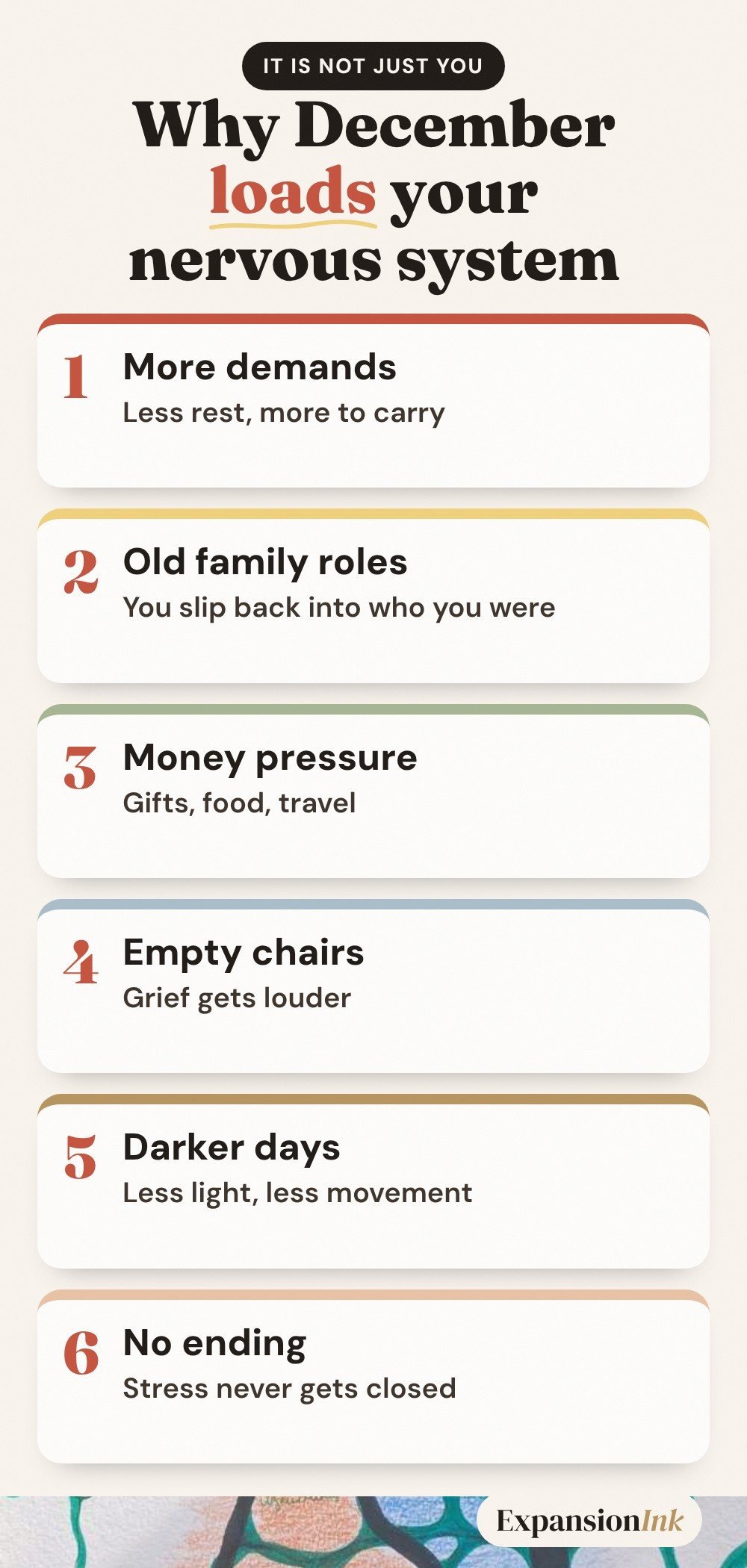
More demands, less rest
December adds dozens of small tasks on top of your normal life. Each one is a tiny “go” signal to your nervous system.
And the usual ways you recover, like enough sleep, physical activity or quiet evenings, are the first things to disappear. Your normal routines get swallowed by the hustle and bustle.
Old family roles
You walk into your parents’ house as a capable adult and somehow you’re 14 again.
Old roles come with old reactions. The peacemaker, the one who organizes everything, the one who keeps quiet.
Your body remembers those roles, even if you outgrew them years ago. That’s why one comment at a family gathering can undo a week of calm.
Money pressure
Gifts, food, travel, the party outfit. Even when you can afford it, money in December often feels tight and loaded with expectation. The pressures of gift-giving are real, especially when you’re the one who remembers everyone.
You’re far from alone in this. In a 2023 poll, 89% of US adults said something stresses them during the holidays, and money was the top reason (American Psychological Association, 2023).
👉 Set a gift budget before you shop, and tell the people who matter early. It’s one of the simplest ways to help reduce stress before it starts.
Empty chairs
If you’ve lost someone, holiday celebrations make the gap louder.
Grief doesn’t follow the festive schedule. It shows up in the middle of the carols.
If that’s you this year, be gentle with yourself. Leave a little space in the day for missing them. You don’t have to be festive every minute.
And if you feel lonely this season, even in a full room, those feelings of loneliness are more common than anyone admits. A short call with a trusted friend can be your ending for the day.
Darker days and no ending
Shorter days mean less daylight, less movement, more sugar and screens. Spending time in nature at lunch, even 15 minutes of daylight, is worth protecting.
If shorter daylight hours bring a low mood that comes back every winter, mention it to your doctor or care provider. Seasonal affective disorder is a real condition, and options like light therapy are a conversation to have with them, not something to guess at.
And underneath it all, the stress never gets an ending. You push through one event and roll straight into the next.

That last point is the one that matters most.
Your body needs a clear signal that the danger has passed. The stressor (the dinner, the bill, the drive) can be over while stress hormones like cortisol are still running. Without that signal, the stress stays in your muscles, your sleep and your patience.
I wrote a whole guide on how to complete the stress cycle, and December is when most of us need it most.
The problem ending and the stress ending are two different things.
Signs of holiday stress and anxiety (that are easy to miss)
The signs are usually quiet: tension, broken sleep and a short fuse, long before anything looks like panic. Often it looks like “I’m fine, just busy.”
See if any of these sound familiar:
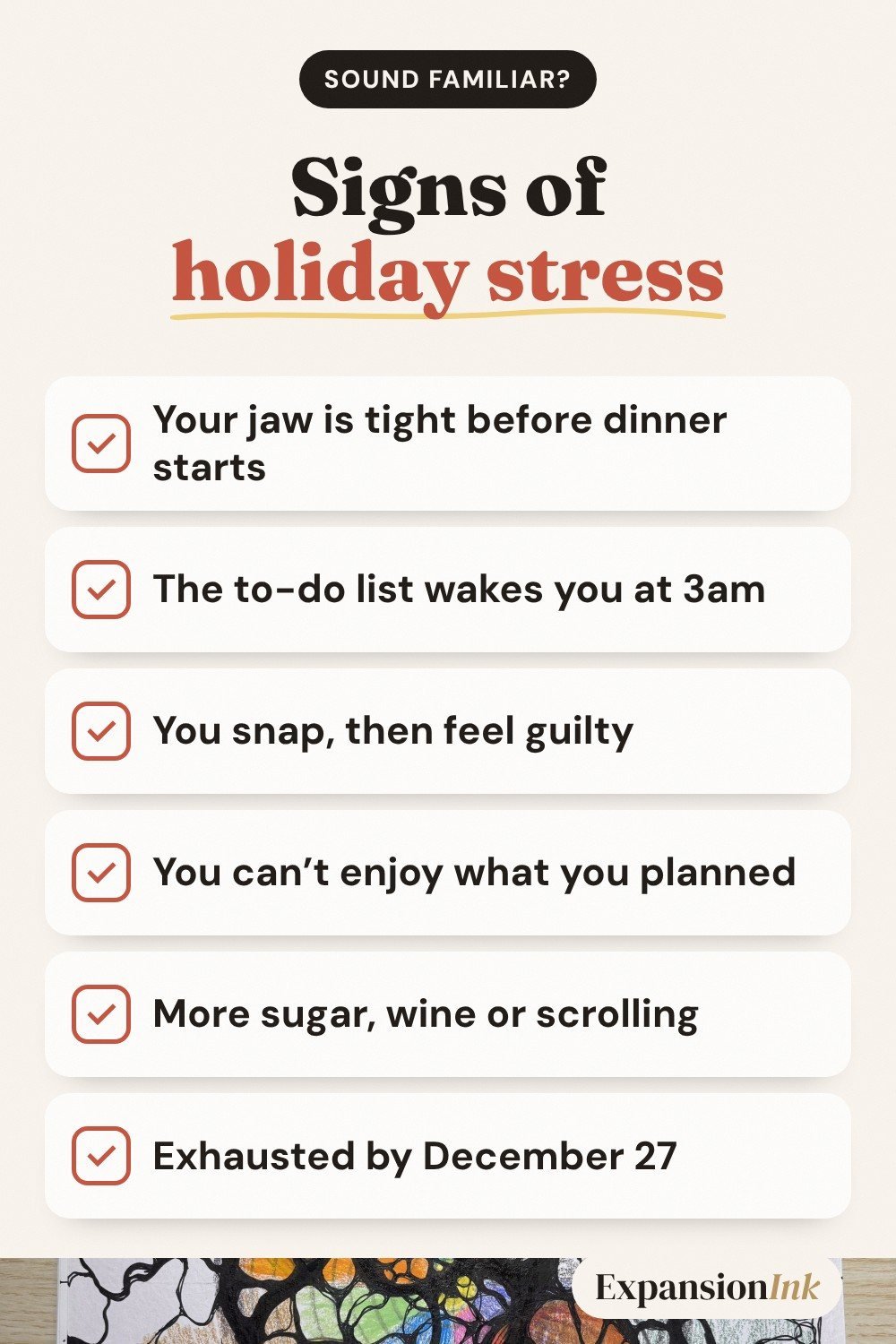
- Your jaw is tight before the family dinner even starts
- The to-do list wakes you at 3am
- You snap at someone you love, then feel guilty
- You can’t enjoy the thing you spent weeks planning
- You reach for more sugar, wine or scrolling to switch off
- By December 27 you’re more exhausted than before the break
If you nodded at two or more, your stress levels are higher than your calendar shows.
For some people, increased stress around the holidays also brings feelings of anxiety, or can exacerbate a mental health condition they already live with. If you’re managing other health challenges, stress can worsen symptoms there too. Either way, plan some extra support before December, not after.
I know this one personally. In 2021, stress was running my life: headaches, tension, fatigue, broken sleep. The usual professional woman’s package nobody talks about.
December made all of it louder.

Free stress quiz
How stressed are you, really?
Take the free Stress Quiz. It takes a few minutes and shows you what kind of stress you are carrying, so you know where to start before December gets busy.
Take the free Stress Quiz →The myth that keeps you stuck in December
There’s a plan many of us run every year without noticing.
“I’ll just get through December. I’ll rest in January.”
It sounds sensible. But your body doesn’t store stress in a folder to deal with later.
It piles up. Each unfinished stress response sits under the next one.
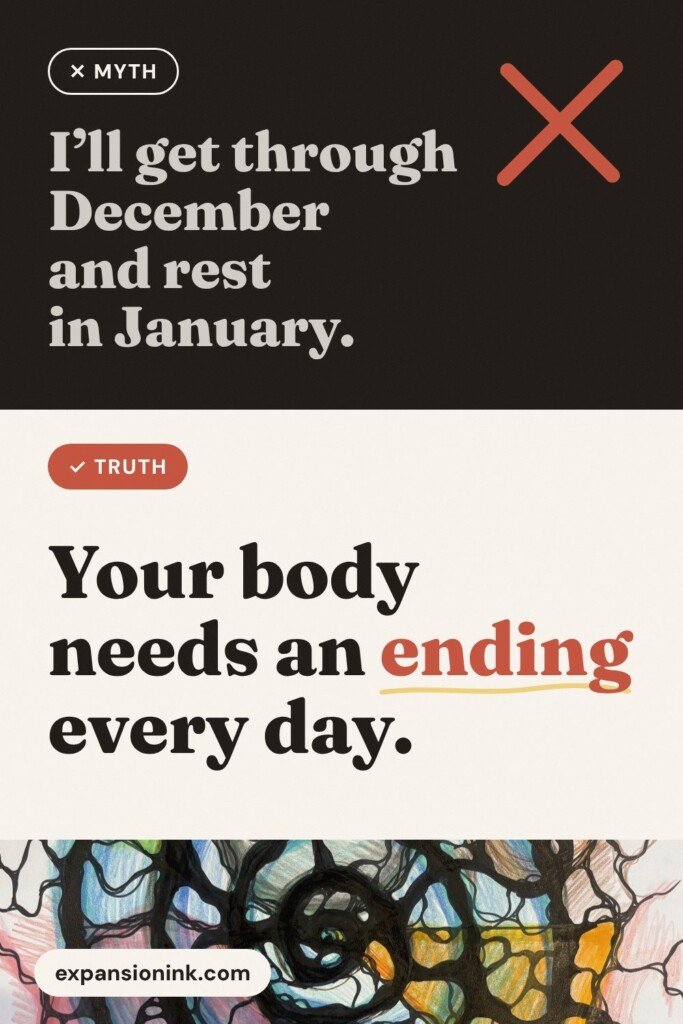
So January arrives, you finally stop, and you crash. You feel flat for weeks, or the first free weekend disappears into the sofa. Sound familiar?
It isn’t laziness, and it isn’t a January thing. It’s a month of unfinished stress showing up all at once. You can’t recharge in one week what drained for a whole month.
👉 The fix isn’t a bigger rest later. It’s a small ending every day.
A 10-minute holiday stress reset you can do every day
This is the simple practice I’d give a friend in December. It’s self-care that doesn’t add another big task to your list, just a short pause for your body and your mind. It needs ten minutes, a sheet of paper and a pen. You can do it in the car before going into a family event, at the kitchen table after everyone’s gone to bed, or in the bathroom with the door locked. (Yes, really.)
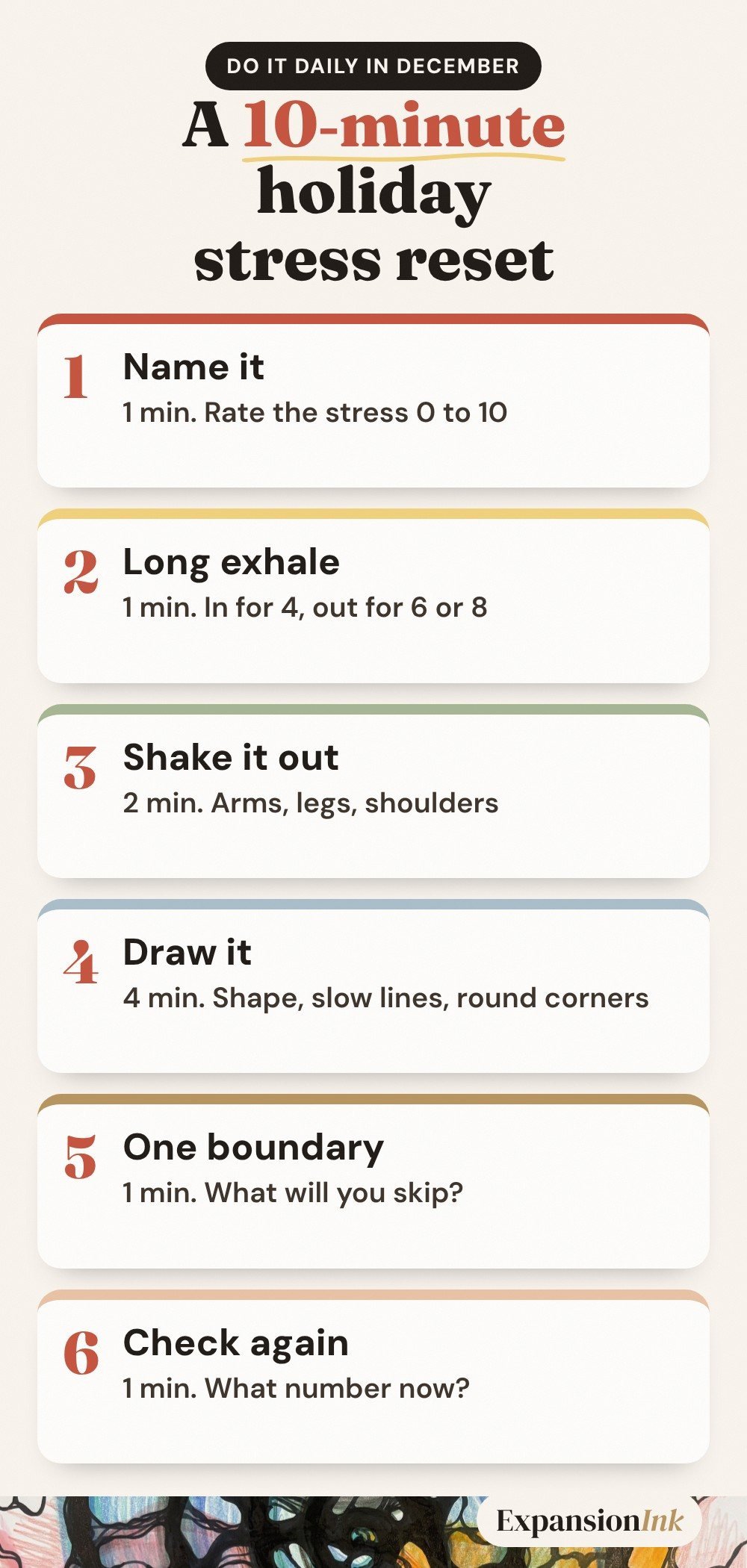
1. Name it (1 minute)
Start by taking a moment and sitting quietly. Ask yourself: “What’s sitting on me right now?” Notice where you feel it in your body.
Give it a number from 0 to 10.
2. Deep breathing with a long exhale (1 minute)
Inhale for a count of four. Breathe out slowly for a count of six or eight.
As in most deep breathing exercises, the longer exhale helps your body shift toward rest. Repeat five or six times.
3. Shake it out (2 minutes)
Stand up. Shake your hands, your arms, your shoulders, one leg, then the other.
It feels silly. That’s fine. Your body got ready for action. Let it move.
4. Draw it (4 minutes)
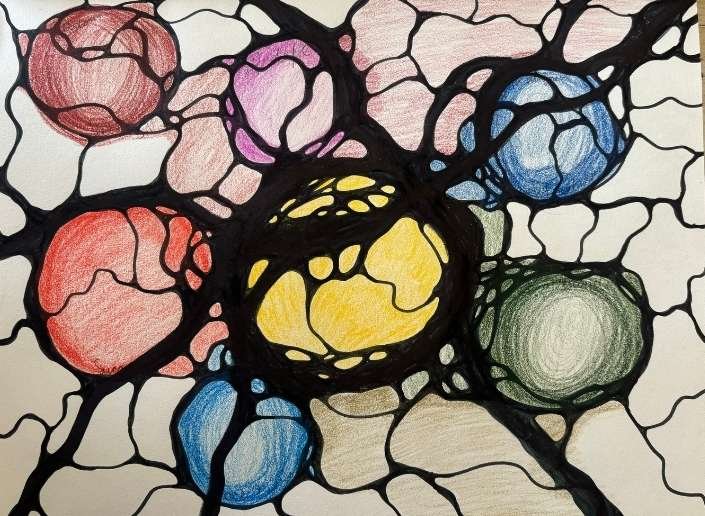
On your paper, draw a shape for what you’re feeling. Tight, tangled, heavy. Don’t plan it.
Then draw five slow lines from one edge of the page to another, passing through and around your shape.
Wherever lines cross at a sharp angle, round the corner with a small curve.
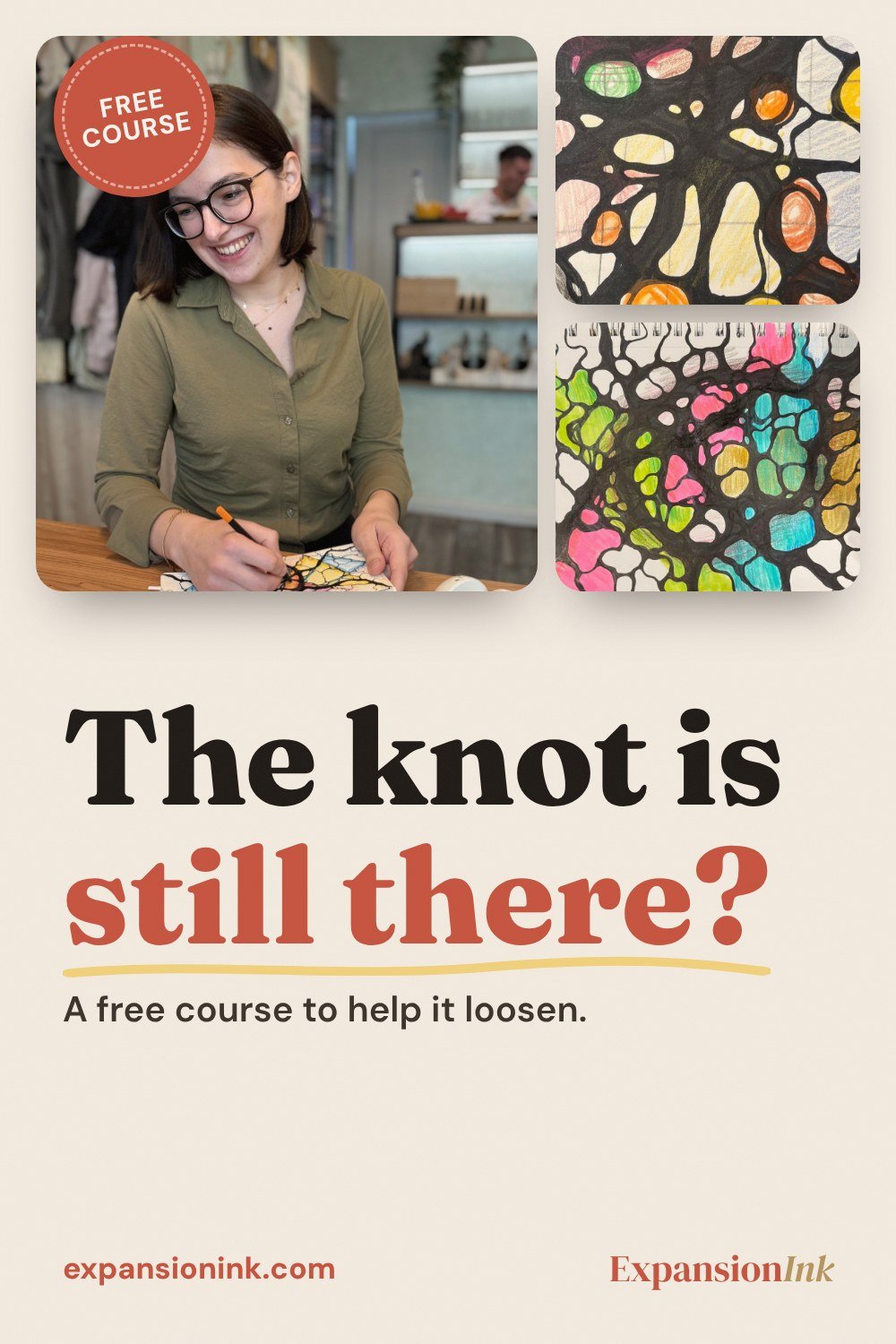
This is a simple structured drawing I use with clients. Think of it as mindfulness with a pen. It slows your hand, and your attention follows. You don’t need any drawing experience.

5. One boundary (1 minute)
Ask: “What’s one thing I can skip, shorten or ask for help with today?”
Write it down. One thing. Not ten.
6. Check again (1 minute)
Notice your body. What number is it now?
Even a drop of one or two points matters. You gave your body an ending. Tomorrow, do it again.
You don’t have to fix December. You just have to close today.
How to manage holiday stress: small swaps and healthy habits
The most effective strategies are small ones that lower the load before it lands: fewer tasks, steadier sleep, a bit of movement and clear limits.
The reset handles the stress already in your body.
These swaps stop some of it from piling up in the first place.

- Pick the three things that matter most. Ask yourself: if only three things happened this Christmas, which would make it feel like Christmas? Let the rest be optional, and save your energy for quality time with the people you love.
- Ask each guest to bring one thing. You don’t have to host like a magazine. People like to help.
- Set realistic expectations. Striving for perfection is where a lot of December stress hides. A good enough Christmas is still Christmas.
- Do the 10-minute reset daily, not just on bad days. It works best as a habit.
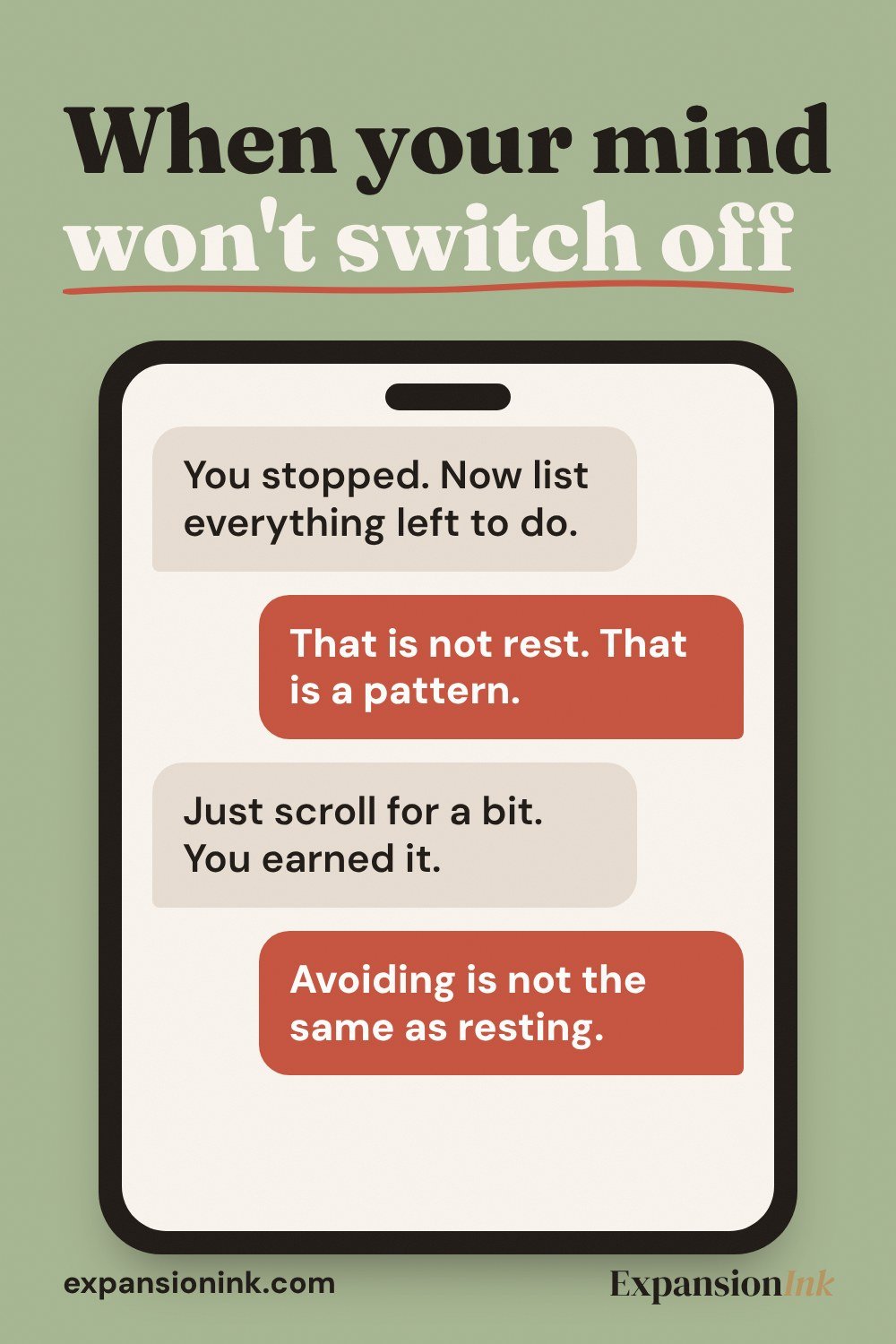
- Swap scrolling for slow lines. Scrolling feels like rest but keeps your mind busy. Ten minutes with a pen and paper actually lets it slow down.
- Set a hard stop. No wrapping, emails or planning after 10pm. And eat real, healthy meals between the parties. Both are part of your health and well-being, and part of your holiday too.
👉 Pick one swap for this week. Just one.
Get enough sleep and stay active (even in December)
Sleep and movement are the first things December takes, and the two your body misses most. Keep that hard stop at night, and stay active in small ways: a walk after lunch, dancing in the kitchen.
Movement releases endorphins and is one of the ways your body finishes a stress response. It doesn’t need to be a workout. Ten minutes counts.
Setting boundaries: four short phrases for the holidays
So much of December’s stress comes from saying yes when your body says no. These help when you’re on the spot (and yes, short breaks count):
- “I can’t do that this year, but I’d love to see you in January.”
- “I’ll bring dessert. Could someone else take the main?”
- “I’m going to step outside for ten minutes. Back soon.”
- “Let me check and get back to you tomorrow.”
That last one is underrated. You don’t have to answer anything in the moment. A day’s pause is often enough to know what you actually want.
A kind no to them can be a kind yes to yourself.
And if family is the hardest part, it often isn’t the event itself. It’s an old belief that gets switched on, like “I have to keep everyone happy.”
You can work on those beliefs on paper too: here’s why drawing often works better than journaling for that.

Read that twice before the next family dinner.
Then keep it on your phone as a reminder.
Need a gentle nudge on a hard day? Shake the jar for a short note to take with you.
When to ask for help with holiday stress and anxiety
Seek help if the stress and anxiety feel too heavy to carry on your own, if they last well into January, or if they start to affect your sleep, eating or daily life. Talk to your doctor, a therapist or your local mental health services (in the US, often called behavioral health services). If you’re in crisis in the US, call or text 988.
Sometimes December just turns up the volume on stress that was already there.
If you feel this way most months, a 10-minute reset will help, but it deals with the stress, not the source. That deeper work is what we do in my programs. It’s a practice, not therapy, and it can sit alongside the evidence-based strategies a mental health professional gives you.
Ready for the next step?
Calmer this December and after
 $19Recorded workshopBreak The Stress CycleFind what keeps your stress running and draw your way out of it.Explore the workshop →
 from $2676-week programThe 6-Week Stress ResetSix weeks of guided drawing to release the stress your body has been holding.Explore the program →
 $11Guided practiceGratitude PracticeFeel gratitude instead of just listing it.Explore the practice →
Break the Stress Cycle helps you find what keeps your stress running. The 6-Week Stress Reset gives you six weeks of guided drawing to release what your body has been holding. And the Gratitude Practice is a short, gentle one for evenings when you need to feel something good.
I’ve supported 1,000+ people through this kind of work, and spent 800+ hours in private and group coaching. Stress went from running my life to being practically non-existent.

That didn’t happen in one December. Emotional resilience grew one small ending at a time.
So start with tonight. Ten minutes, one sheet of paper, one small ending. Then do it again tomorrow.
FAQ
What causes holiday stress?
A mix of more demands and less rest, old family roles, money pressure, grief, darker days and stress that never gets an ending. Your body keeps reacting even when your calendar looks under control.
How do I deal with holiday stress quickly?
Try a 10-minute reset: name the stress and rate it, take slow breaths with a long exhale, shake out your body, draw a shape for the feeling with slow lines through it, choose one thing to skip, then check in again.
Why do I feel overwhelmed during the holiday season?
Because December adds tasks, social events, spending and family expectations while taking away sleep, routines and alone time. Your body reacts to the total load, even when each single task looks small.
Why do I feel so tired after Christmas?
Often because the stress built up all month without ever being released. When you finally stop, your body feels the full load. A small daily reset in December can help.
Is Christmas stress normal?
Yes, it is very common. That does not mean you have to just push through it. Small daily habits can make December feel lighter.
When should I seek help for holiday stress?
If the stress or low mood feels too heavy, lasts into the new year, or affects your sleep, eating or daily life, talk to your doctor or a licensed mental health professional. What I share here is a coaching practice, not therapy or medical treatment.
Your December, one ending at a time
You don’t have to love every minute of the holidays.
You just need ten minutes a day where your body gets to put it down.
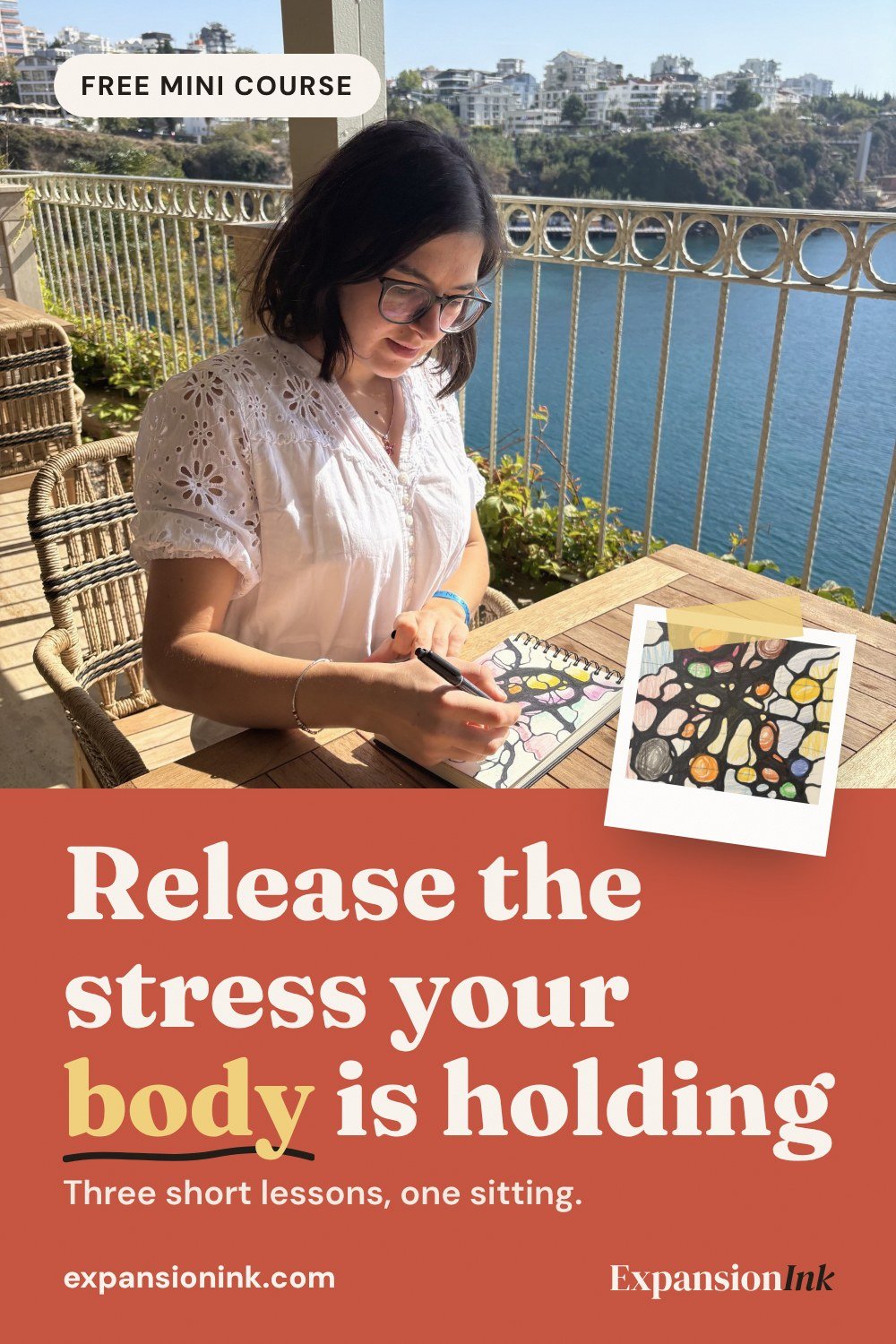
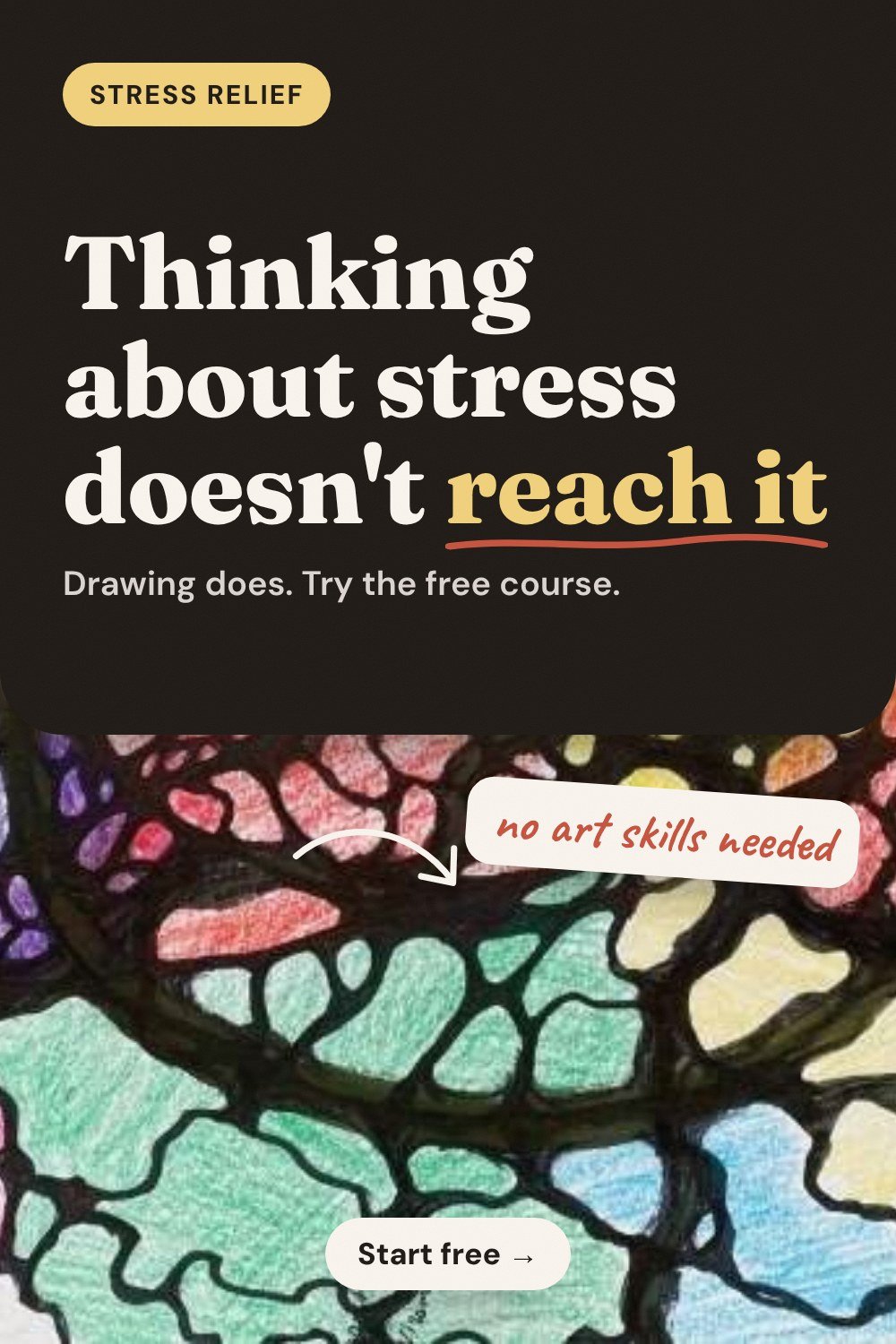
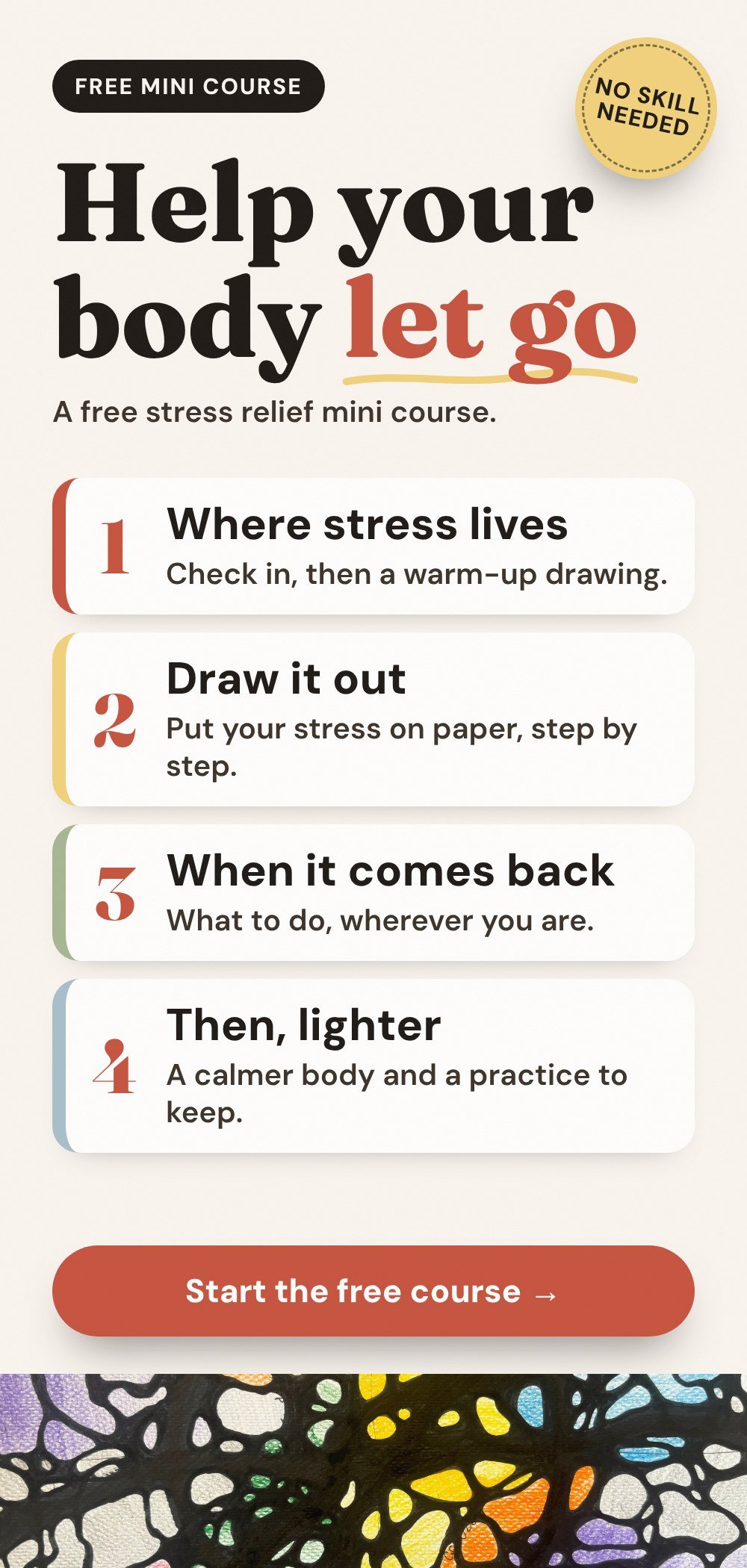
✨ If you’d like a guided start, begin Feel Lighter, my free mini course with three short lessons.

Free mini course
Feel lighter before Christmas
Let go of the stress your body has been holding, with three short lessons and simple drawing practices. No drawing skill needed.
Start Feel Lighter free →