
You finally have a record month.
More sales than ever, a full calendar, a client who says yes without negotiating.
And then the next month goes quiet.
Not because the market changed. You stopped posting. You didn’t follow up. You got sick the week of the launch.
If that sounds familiar, you’re not lazy and you’re not broken.
You’ve most likely met your upper limit problem.
In this post I’ll show you 7 business examples of what it looks like, why it happens and how we work with it, so your next good month doesn’t turn into a reset.
Your business works. So why does it keep stalling at the same number?
Most entrepreneurs I talk to don’t have a strategy problem.
They know what to do. They’ve done it before. That’s how they reached this level of success in the first place.
What happens is more specific.
Things are going well, income goes up, and then something “happens”.
- A sudden crisis.
- A new idea that pulls all your focus.
- A week where you just can’t make yourself send the offer.
Over a year, it looks like a ceiling.
Revenue climbs, drops back, climbs again and settles at roughly the same number.
👉 You’re stuck at the same revenue, even though you keep learning more.
I spent 9 years in marketing at director level before I became a coach.
I watched strong strategies stall many times. Almost never because the plan was wrong.
Usually because the person running it reached a point where more felt uncomfortable.

What is the upper limit problem?
The upper limit problem comes from psychologist and author Gay Hendricks, in his book called The Big Leap (2009).
His idea, in short: each of us has an internal thermostat for how much success, love, wealth and happiness we allow ourselves to feel.
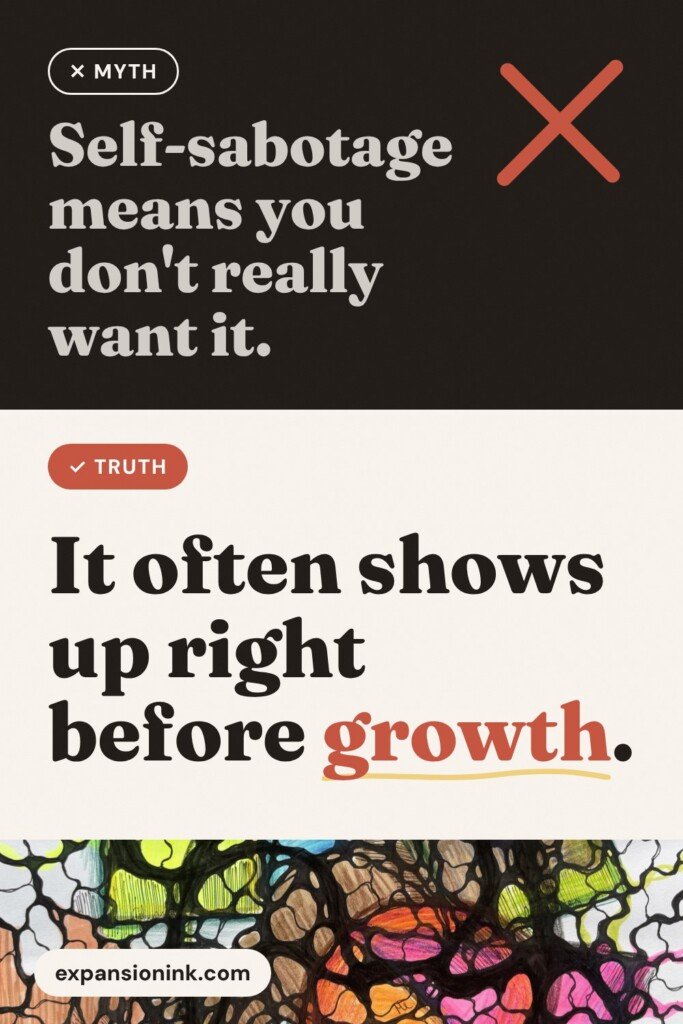
When life goes above that setting, we unconsciously do something to bring it back down to what feels familiar.
He calls this upper limiting.
- Worrying for no clear reason
- Blaming and criticizing
- Picking a fight, or finding a reason to start an argument with your partner right after good news
- Getting sick
We don’t do it because we want less. We do it because more feels unfamiliar, and unfamiliar doesn’t feel safe.
Hendricks also writes about the zone of genius: the work only you can do, where your excellence and creative contribution live.
The ULP, as he shortens it, is what keeps pulling people out of that zone and back into their comfort zone.
If you want the full picture, The Big Leap by Gay Hendricks is worth reading.
Here I’ll focus on how upper limiting shows up in business, because that’s where I see it most.
7 upper limit problem examples in business
These are illustrative scenarios, built from patterns that come up again and again. They’re not stories about specific clients.
👉 See which one feels familiar.
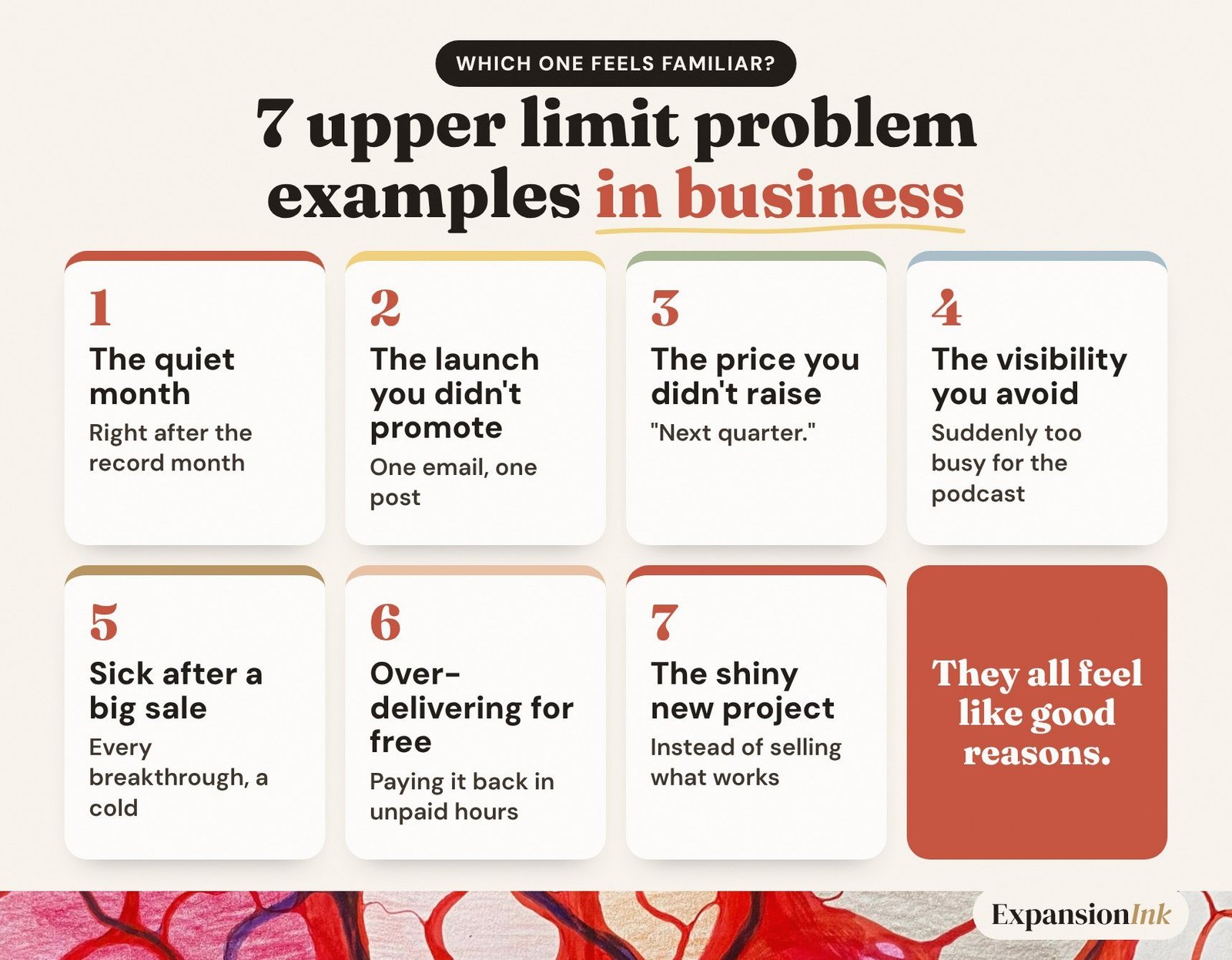
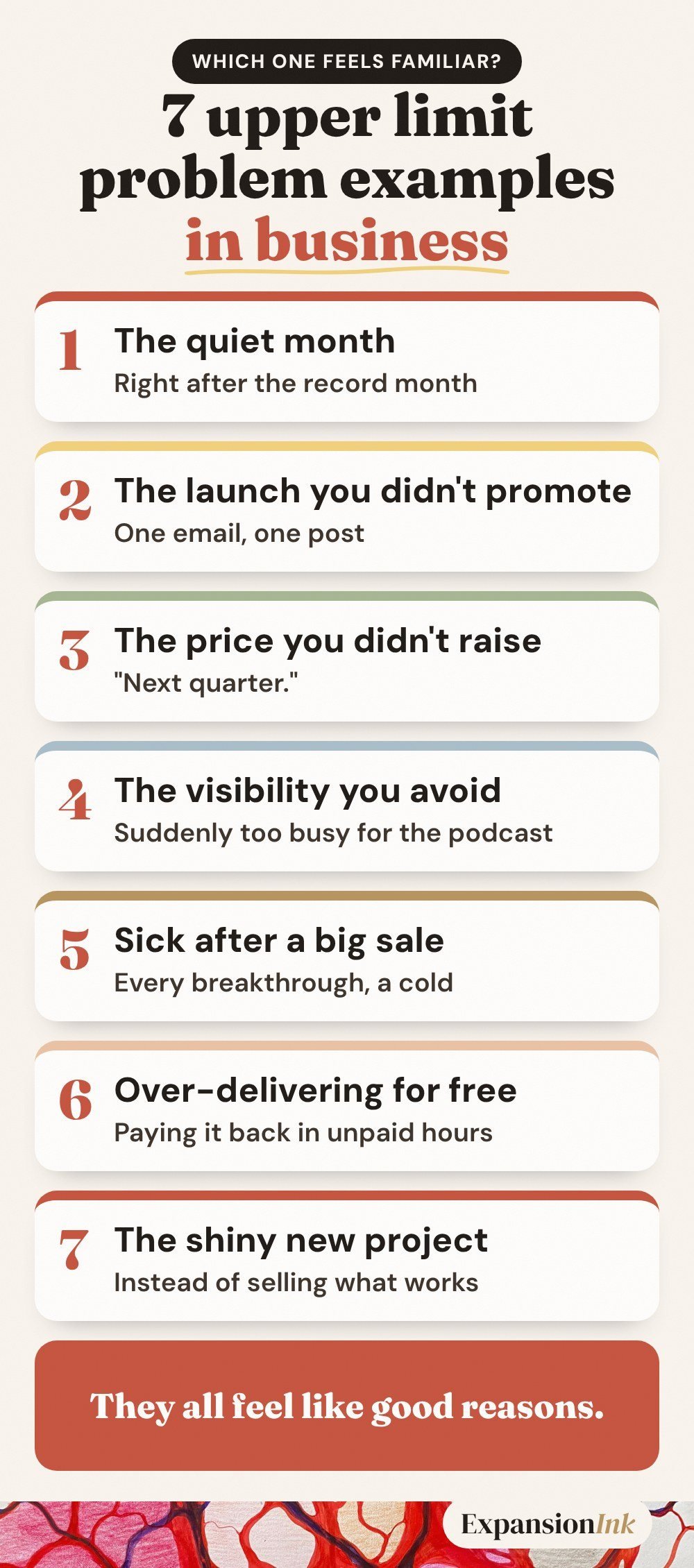
1. The record month, then the “quiet” month
For example, a coach has her best month ever. Five new clients.
The next month she “takes a break from social media” and doesn’t book a single call.
She tells herself she’s resting. Really, her system is turning the volume back down to the level it knows.
2. The launch you didn’t promote
For example, a course creator spends six weeks building a program, then sends one email and one post.
When sales are low, she decides nobody wants it.
The offer was never really tested, because promoting it meant being seen wanting it to work.
3. The price you didn’t raise
For example, a designer is fully booked and knows she’s undercharging.
She types the new price into her proposal, then deletes it before sending.
“Next quarter.” Next quarter never quite comes.
4. The visibility you suddenly avoid
For example, a consultant gets invited to speak at a live event or on a podcast with a much bigger audience.
Suddenly she’s too busy, the timing is wrong, or she needs to “update the website first”.
5. Getting sick right after a big sale
For example, a business owner signs her biggest contract, and two days later she’s in bed with a sore throat, a headache or a cold that lasts two weeks.
Illness happens, and it isn’t always a sign of anything.
👉 But if you get sick after every breakthrough, the pattern is worth noticing.
6. Over-delivering for free
For example, a coach signs a premium client and then adds extra calls, bonus resources and late-night messages nobody asked for.
Part of her feels guilty receiving that much money, so she pays it back in unpaid hours until the work feels heavy.
7. Starting a new project instead of selling the one that works
For example, an entrepreneur finally has an offer that sells consistently.
Right then she gets excited about a brand new idea: a new niche, a new podcast, a rebrand.
The working offer gets less attention, and income drifts back to where it was.
Look at what these have in common.
None of them feel like self-sabotage from the inside. They feel like good reasons.
That’s exactly what makes upper limiting so hard to recognize and identify.

👉 If the price or money example hit a little close, my Your Next Income Level workshop ($47) helps you set a real income number for the next three months and find the belief that makes more money feel heavy.
Why it happens: your nervous system reads growth as danger
Fear of success sounds strange.
Who would be afraid of what they want?
But look at it from your body’s side.
Your nervous system’s first job is to keep you safe, and “safe” mostly means “known”.
The income you have now, the visibility you have now, the responsibility you carry now: that’s familiar.
Growth, by definition, isn’t.
So when you exceed your usual level, your body reacts to the change, not to the facts.
The thought “this is great” sits right next to a feeling of “this is too much”.
And the feeling usually wins, quietly, through small decisions.
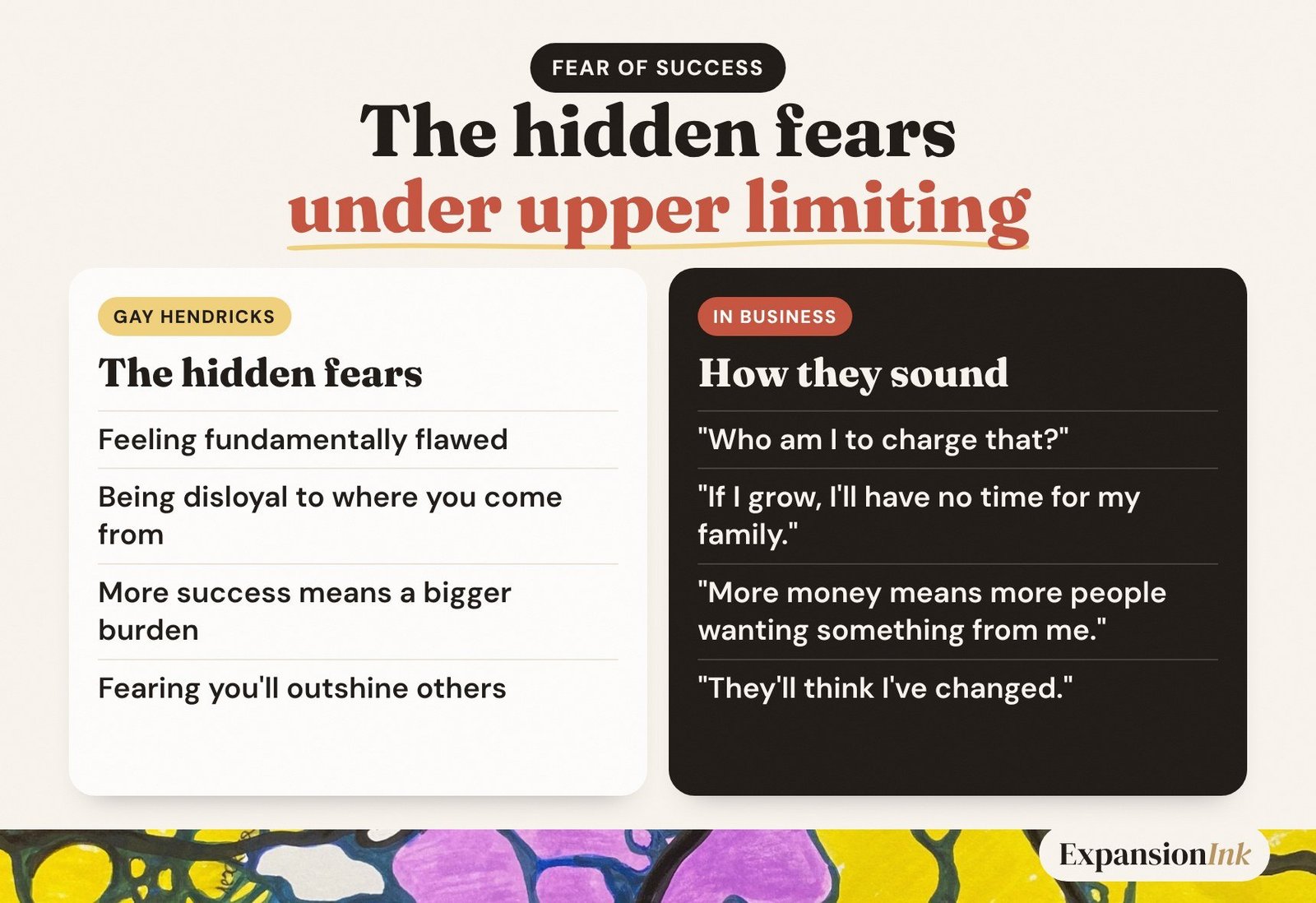
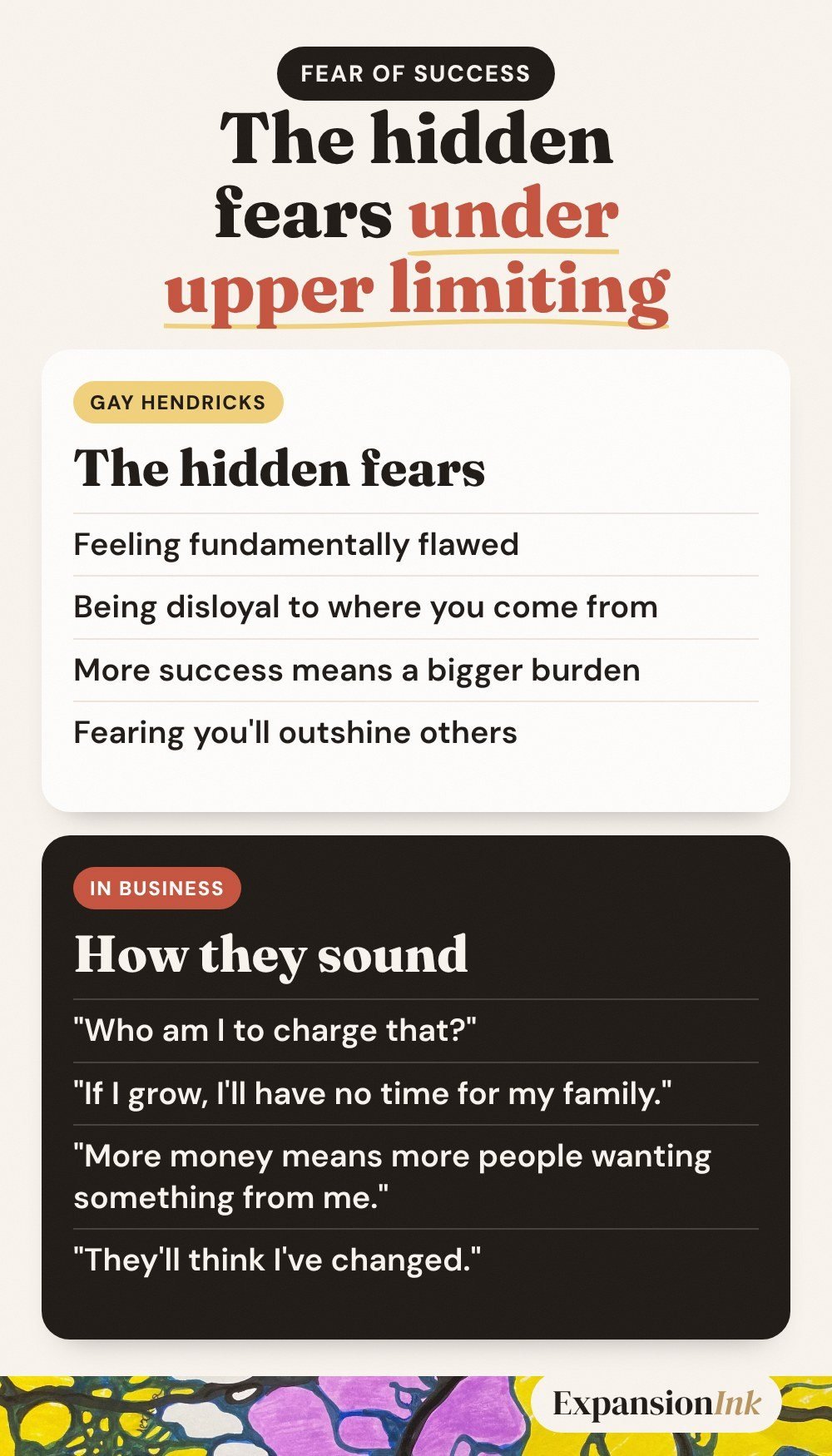
Hendricks describes a few hidden fears under this:
- feeling fundamentally flawed
- worrying that success will make you disloyal to where you come from
- believing more success means a bigger burden
- fearing you’ll outshine others
In business, they sound like this:
- “Who am I to charge that?”
- “If I grow, I’ll have no time for my family.”
- “More money means more people wanting something from me.”
- “They’ll think I’ve changed.”
👉 None of these are character flaws. They’re old protective habits.
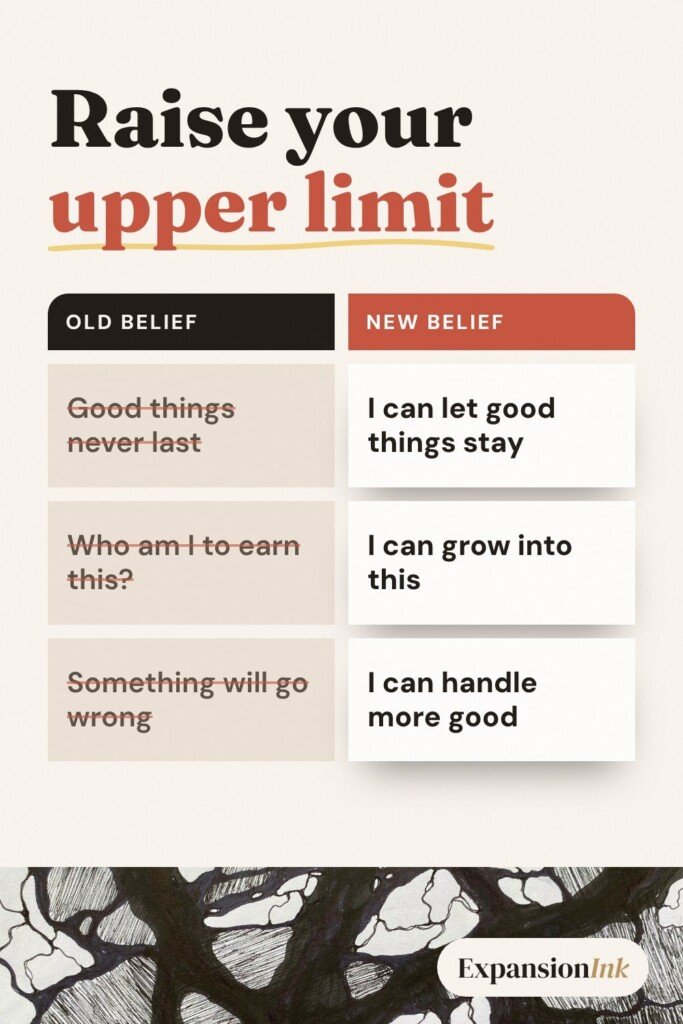
That’s why self-sabotage in business rarely responds to more strategy or more willpower.
The psychology runs deeper than the plan.
I know this from my own life too.
Stress used to run my days: headaches, tension, poor sleep.
When stress is high, your tolerance for anything new is low, and every new level feels like one more thing to carry.
That’s why, in my work, step one is always the stress cycle. If that’s where you are, start with how to complete the stress cycle.
The 5 ceilings: which one is yours?
In my work with entrepreneurs, the upper limit problem tends to show up in five places.
I call them the five ceilings.
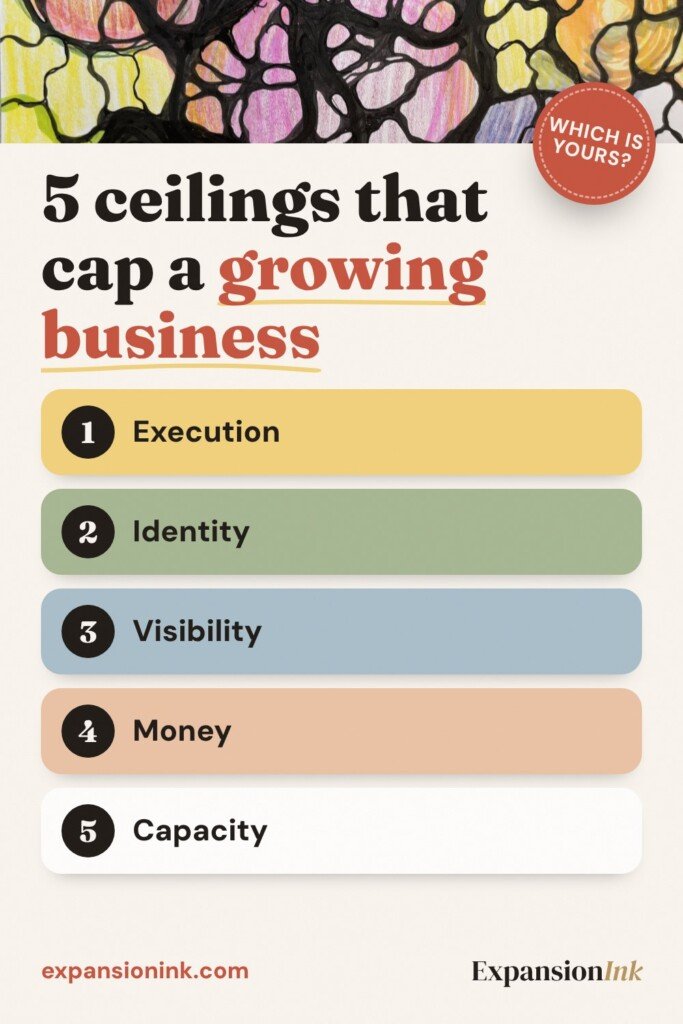
- Execution. Overthinking, perfectionism and changing direction. You know the plan but keep rewriting it.
- Identity. Part of you still runs on the identity that built your current level. The next level asks for a different version of you.
- Visibility. More people seeing you creates quiet resistance. You hide right when it’s time to show up.
- Money. Charging, selling or receiving more brings up old beliefs about money, wealth and your relationship with abundance.
- Capacity. “More” has come to mean more pressure and exhaustion, so your system says no.
Most people have one main ceiling and one or two smaller ones.
👉 Knowing which one is yours changes what you work on first.

Free assessment
Which ceiling is yours?
Take the free Six-Figure Ceiling Assessment. It takes about 5 minutes, shows which of the five ceilings is holding your business back and gives you a next step that fits.
Take the free assessment →How to break the pattern: calm first, then strategy
Most advice on how to stop self-sabotaging jumps straight to strategy.
Set bigger goals. Raise your prices. Post more.
That’s the right direction, just the wrong order.
If your body reads the next level as danger, a bigger goal only raises the alarm.
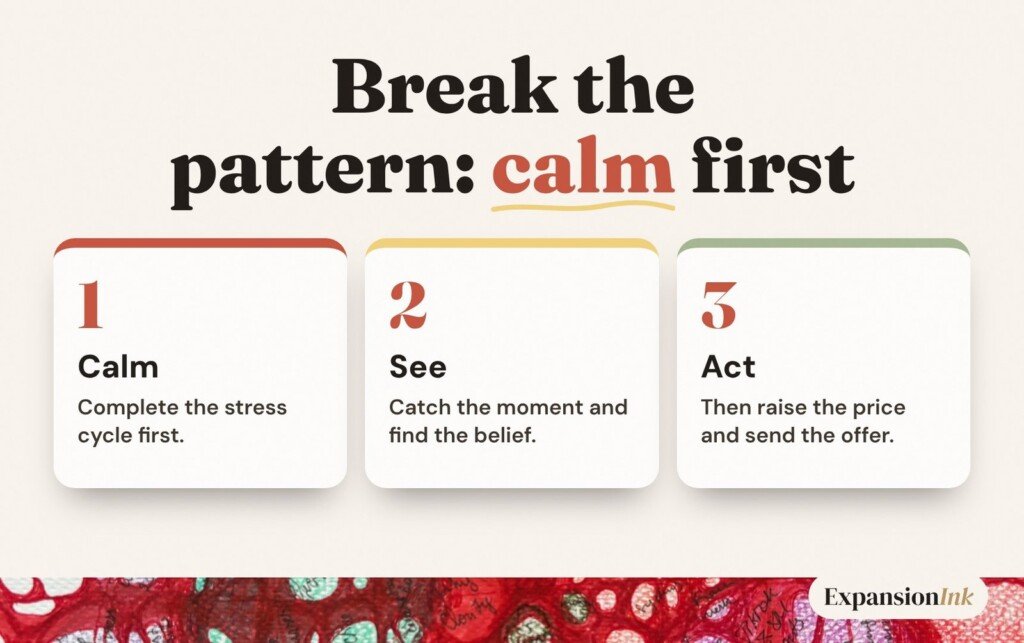
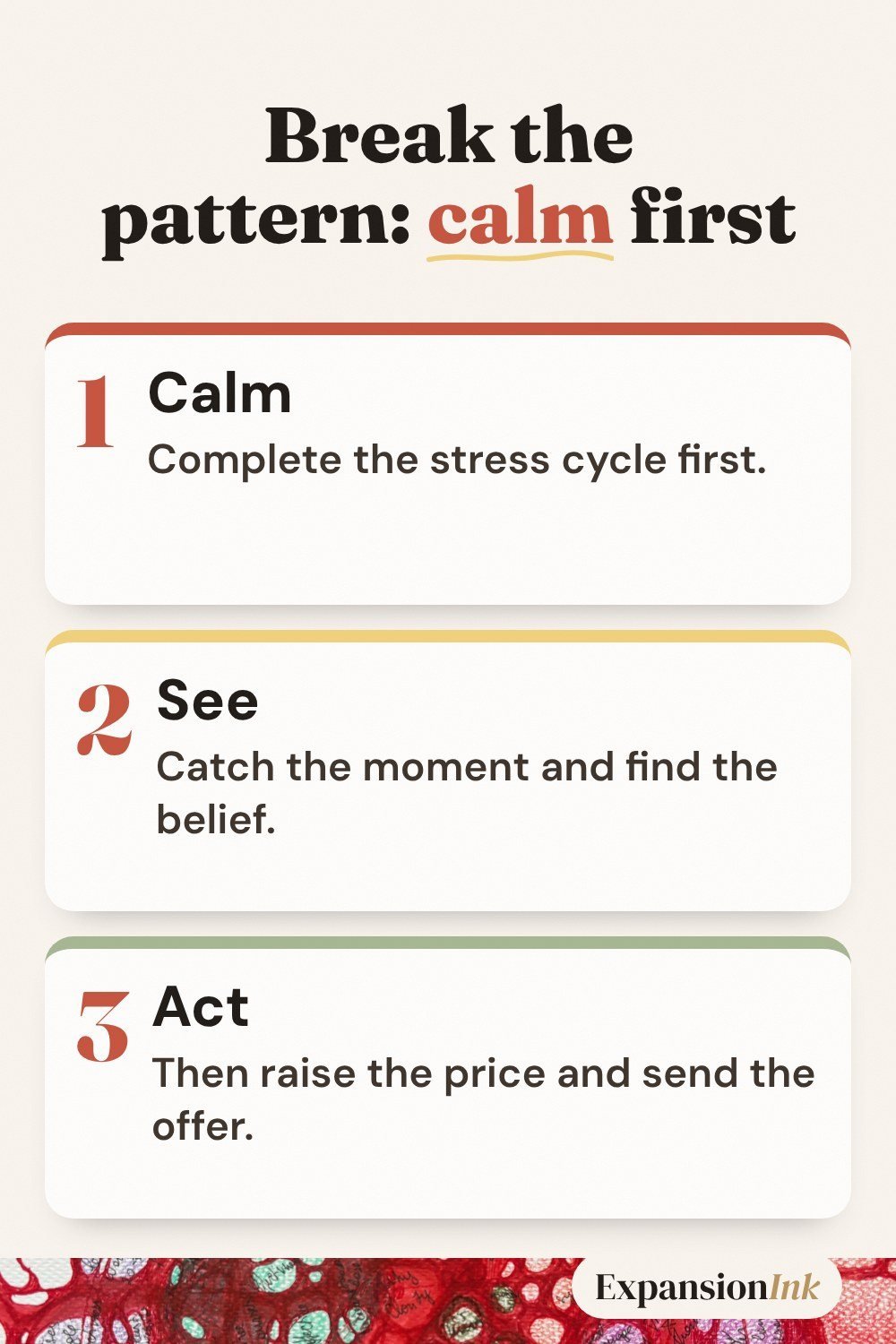
So we work in this order:
- Calm the pressure. Complete the stress cycle, so your system isn’t already at its limit before you start.
- Catch the moment. Notice upper limiting while it happens: the sudden worry, the urge to pick a fight, the shiny new idea that shows up the day after a sale. Ask yourself, is this real, or is it my thermostat?
- See the belief. Find the thought underneath. “Who am I to…” “If I have more, I’ll lose…”
- Let the new level feel familiar. Give yourself permission to enjoy it. Appreciate the good month instead of rushing past it. Small doses, until your body stops treating it as an emergency.
- Then the strategy. Now raise the price, send the offer, say yes to the podcast. Make it a commitment you keep, whether or not it feels comfortable yet.
A short exercise: draw your ceiling
Drawing is one of the tools I use, because it lets you see a pattern on paper instead of arguing with it in your head.
(Here’s why drawing often works better than journaling for this.)
👉 You don’t need any drawing experience. A plain sheet of paper and a black marker are enough.
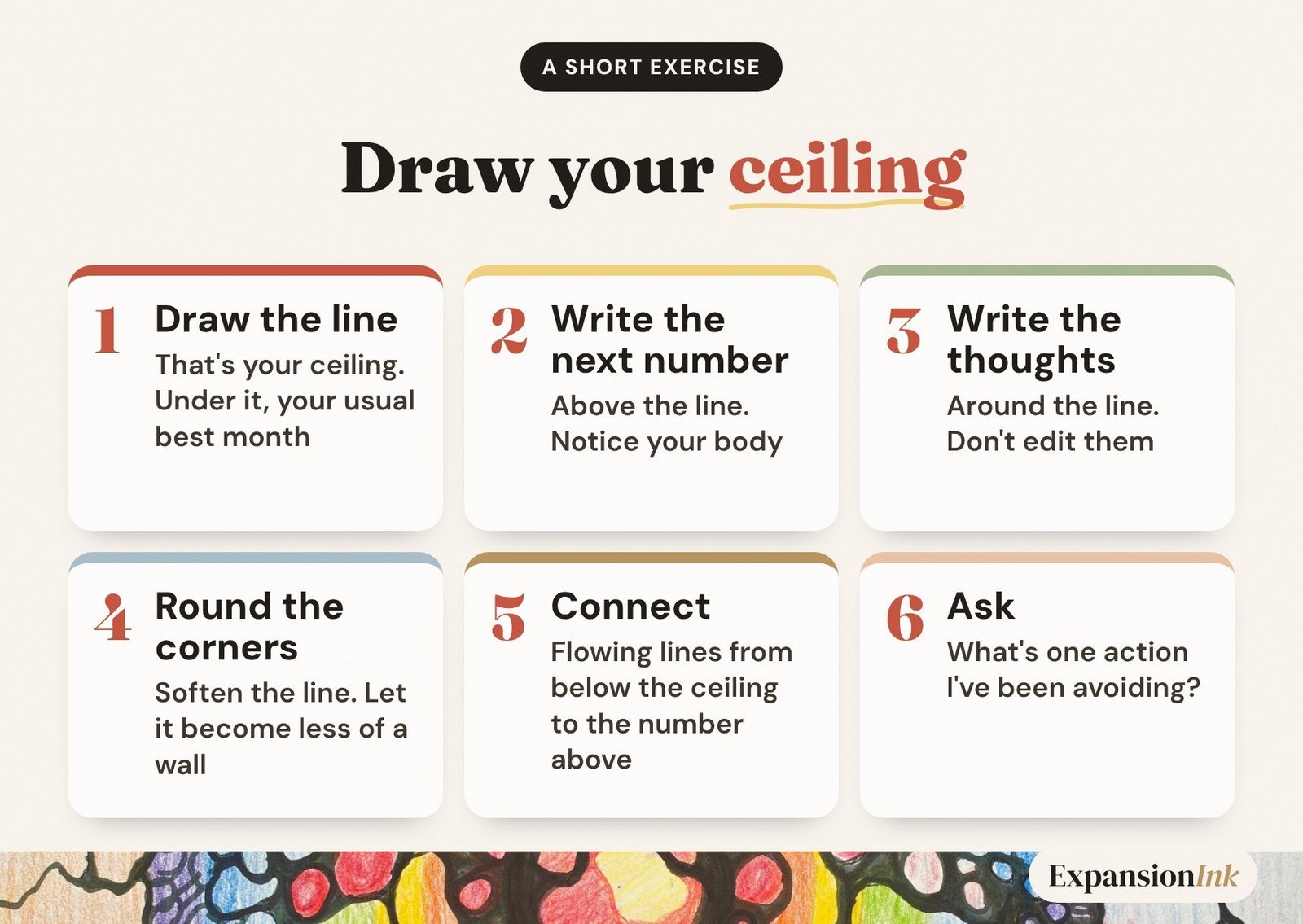
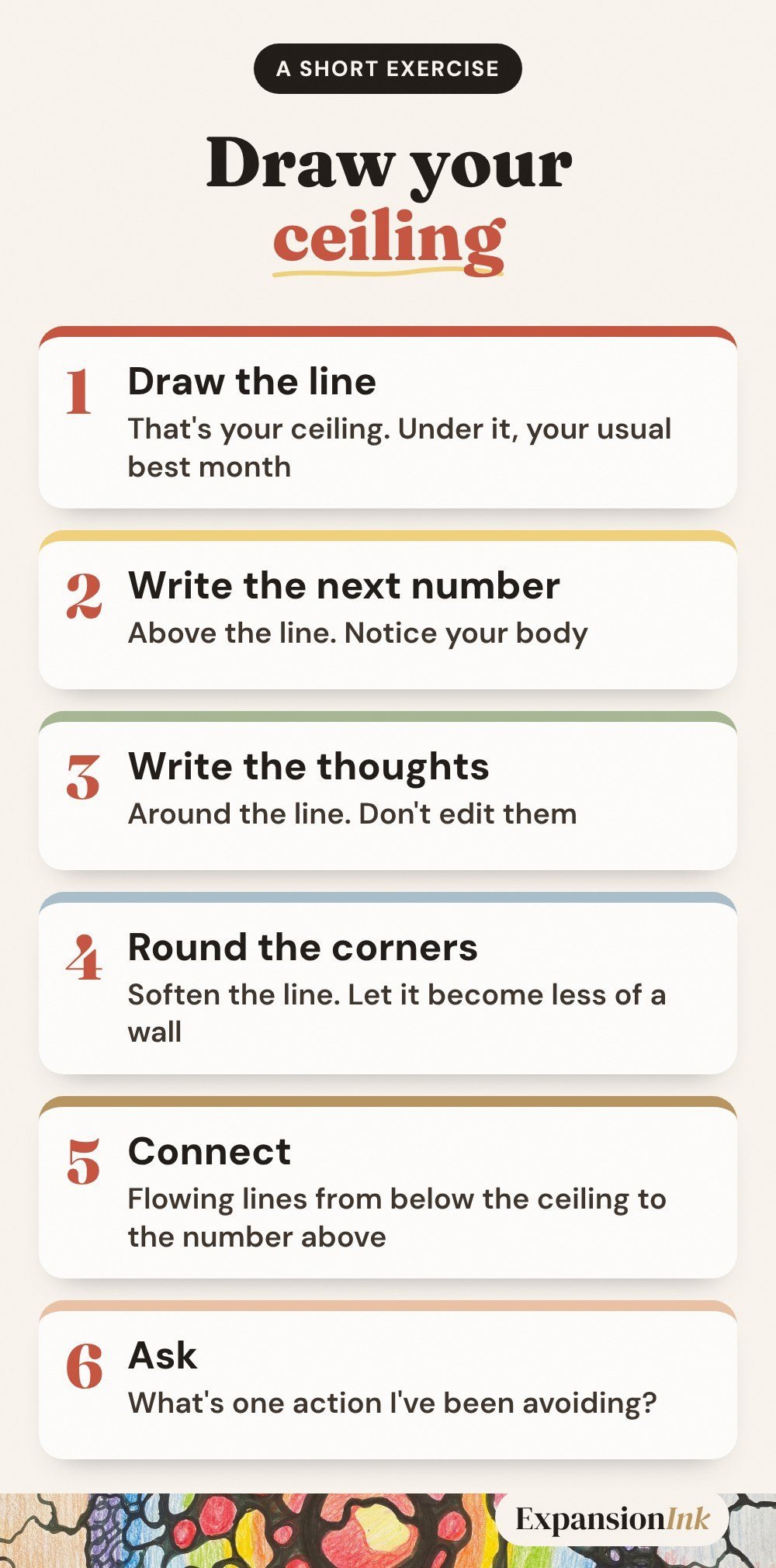
- Draw a horizontal line across the page. That’s your ceiling. Under it, write your usual best month.
- Above the line, write the number you want next. Notice what happens in your body as you write it. Excitement? A tight chest? A voice saying “be realistic”?
- Around the line, write the thoughts that show up. Don’t edit them.
- Go back over the line and round every sharp corner where it meets the edges of the page and your words. Soften it. Let it become less of a wall.
- Draw a few flowing lines that connect the space below the ceiling with the number above it. If you’ve never drawn this kind of line, here’s how to draw neurographic lines.
- Look at the page and ask: what’s one action I’ve been avoiding that belongs above this line?
It’s simple, but it does something useful.
A vague feeling becomes something you can see.
And what you can see, you can start to change.

Free checklist
Stop going in circles
The 5-Minute Decision Checklist helps you work through your next decision in five focused minutes.
Free. You’ll also get emails from me. Unsubscribe anytime.
When mindset tips aren’t enough
Reading about upper limiting helps. Naming it helps.
But if you’ve hit the same ceiling for a year or more, insight alone usually won’t move it. It’s older than your business.
In 800+ coaching hours and with 1,000+ people supported, I’ve seen that the shift rarely comes from one more tip.

👉 It comes from changing what feels normal to you, at the level of identity. That’s where we transform it.
If you want to go deeper, there are two ways to work with me:
- Aligned Impact: six sessions to go from too many ideas to one 90-day map, and clear the money, visibility and “who am I to” beliefs that keep you circling.
- Private coaching: three months, one to one, for business owners with real sales who keep meeting the same inner ceiling. By application.
✨ Not sure which fits? Start with the free assessment. Your result points to the right next step.
Ready for the next step?
Raise your ceiling with a workshop
 $47Self-studyYour Next Income LevelFind the belief that makes more money feel heavy, and draw your way past it.Explore the program →
 $27Recorded workshopStop Asking For PermissionNotice where you wait for permission, and start trusting your own decisions.Explore the workshop →
 from $2676-session programAligned ImpactFrom too many ideas to one 90-day map you will actually follow.Explore the program →
More reading: Build a 6-Figure Business: The No-Nonsense Guide · Grow Your Money Tree workshop · Release limiting beliefs by drawing them
FAQ
Is the upper limit problem real?
It’s not a clinical diagnosis. It’s a framework from Gay Hendricks’ The Big Leap that describes a very common pattern: pulling back right after things go well. You don’t need a label to use it. If you see the pattern in your own business, it’s real enough to work with.
How is it different from imposter syndrome?
Imposter syndrome is the feeling that you’re not good enough and will be found out. The upper limit problem is about what you do once you are doing well: you bring yourself back down. They often show up together. Imposter thoughts and other negative thoughts can be one of the ways upper limiting shows up.
How can you tell if you have an upper limit problem?
Look at what happens right after a good week or month. If you keep getting sick, picking fights, going quiet or starting something new right after a win, that’s your thermostat talking.
Can you overcome the upper limit problem and raise your limit?
Yes. Your internal thermostat was learned, so it can change. That’s neuroplasticity at work: your brain keeps forming new patterns throughout life. It usually moves in steps: you calm your system, notice the pattern, work with the belief underneath and let the new level feel normal. Each time, the ceiling moves up, and you can feel good at a level that used to feel like too much.
Your next level, made familiar
You already built something that works.
Now let’s make the next level feel safe enough to stay in.

Free assessment
Start with the free Six-Figure Ceiling Assessment
In about 5 minutes you'll know which ceiling is yours and what to work on first.
Find my ceiling →