The Calm Advantage · Business case
Stress is already on your budget.
It just isn’t a line item. It shows up as slower decisions, sick days, people who stay but switch off, and people who leave. This page puts numbers on it, so you can decide if a workshop pays for itself.
The problem in numbers
This isn’t a few bad weeks.
of employees worldwide feel a lot of stress on any given day.
working days lost every year to depression and anxiety, worth nearly US$1 trillion.
in lost productivity from low engagement in 2024, about 9% of global GDP.
a year: what poor mental health costs UK employers alone.
Sources: Gallup, State of the Global Workplace 2024 · WHO and ILO, 2022 · Gallup, State of the Global Workplace 2026 · Deloitte UK, 2024
Where the money goes
The biggest cost is people who are there.
Absence is visible. The larger cost is presenteeism: people at their desk, working below their best because they’re stretched. Then there’s turnover.
Sources: Deloitte UK, 2024 · Gallup · HSE, 2023/24
Your number
What is stress costing your team?
Each leaver is costed at half a yearly salary, the low end of Gallup’s estimate.
41% is the global average (Gallup 2024).
Distraction, rework, slower decisions. 2 hours is a cautious starting point.
Estimated yearly cost of stress
for your team, every year
Stressed people × hours lost × 46 weeks × hourly cost (salary ÷ 1,720), plus leavers × half a salary. An estimate, not a guarantee. Nothing you type is sent anywhere.
What happens in the session
Ninety minutes, start to finish.
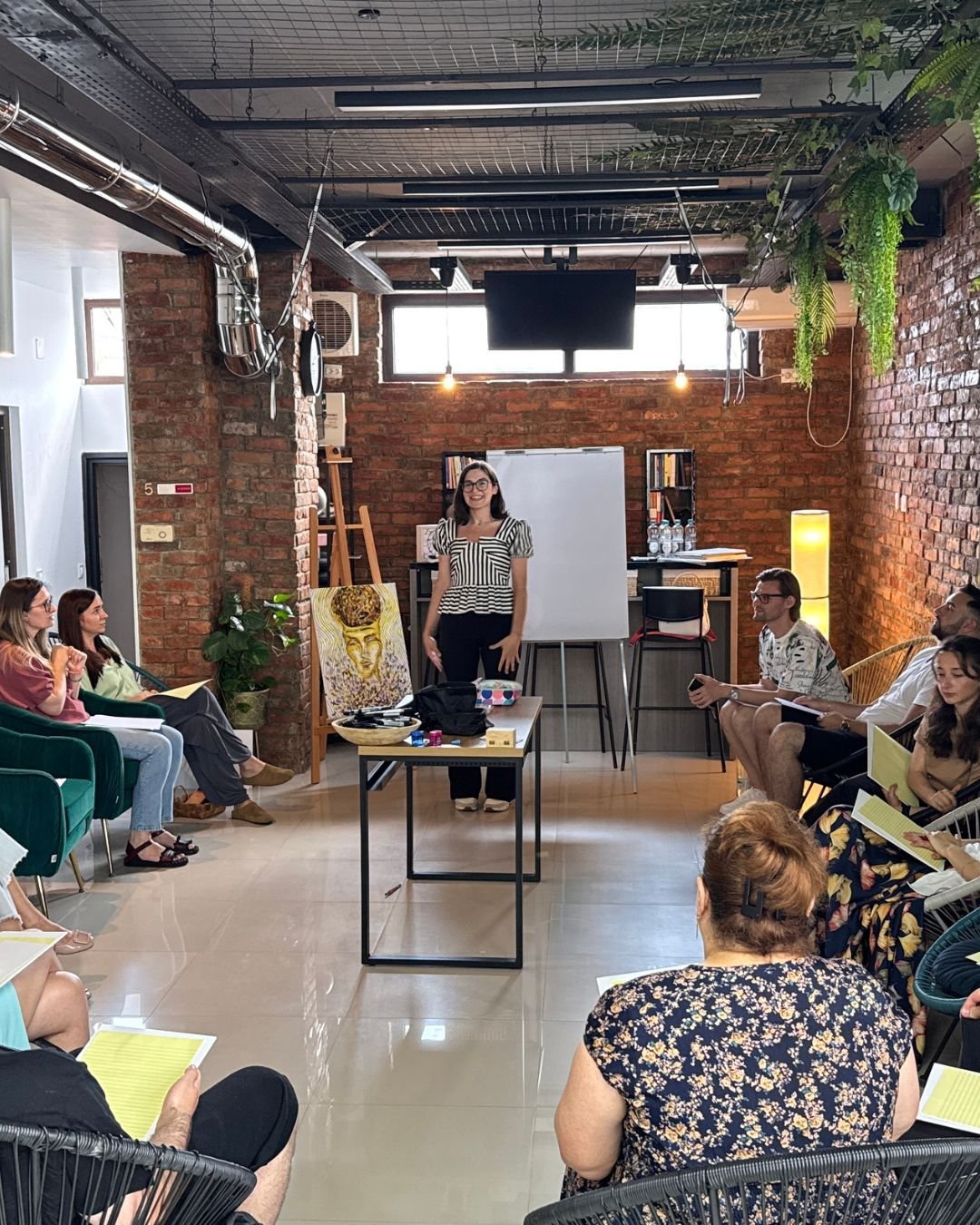
Everyone works on paper, on their own real situation. No drawing skill needed, and nobody has to share anything personal.
Everyone scores their stress from 0 to 10 and names where they feel it.
What pressure does in the body and the brain, in plain language.
Step by step, people turn one stressful situation into a clear next step.
A short practice they can repeat alone before a hard meeting.
A new stress score and one action for the week.
Online sessions run 60 to 90 minutes. In person, a half day goes deeper.
The return
Wellbeing spend that comes back.
back in productivity for every £1 UK employers put into workforce mental health and wellbeing.
saved every year if stress in your team drops by just 10%. Worked out from your numbers on slide 4.
the reset practice everyone takes away and can repeat on their own.
a yearly salary saved for every person who stays instead of burning out and leaving.
Sources: Deloitte UK, 2024 (average across wellbeing investment, not a promise for one workshop) · Gallup (cost of replacing an employee)
Why HR and leaders say yes
It ticks the boxes.

Who runs it
Ana Jomir, neuroscience coach.
Before coaching, nine years in marketing and corporate roles. So the pressure your team is under isn’t theory to her.
- 1,000+people in her workshops and programs
- 100+private clients
- 500+marketing campaigns managed, up to director level
- 3languages: English, Romanian, Russian
What you get
Clear scope, no surprises.
Price on request. It depends on format, length and group size.
Next step
Let’s look at your team.
Send a few details and I’ll come back with a proposal. Bring your number from the calculator, it makes the conversation easier.